They’re an easy go–to for salads, sandwiches or even a quick snack.
But cherry tomatoes are to blame for recurring food poisoning outbreaks across Europe spanning over a decade, experts have warned.
Between 2011 and 2024 there were 643 recorded outbreak cases of Salmonella Strathcona across 17 countries including England, Germany and Austria.
The illness can cause painful stomach cramps, diarrhoea, fever, vomiting and headaches – and in extreme cases, it can even prove deadly.
For the study, researchers examined the genetic makeup of the bacteria’s microorganisms and found 95 per cent were highly genetically related over time and across countries.
The team said the infections were compatible with a common source and deemed it ‘likely that tomatoes may have been the vehicle in most if not all the years’.
Specifically, small tomatoes from the Italian island of Sicily are the culprit, they found.
And they warned that simply washing them may not be an effective preventative measure against the illness.
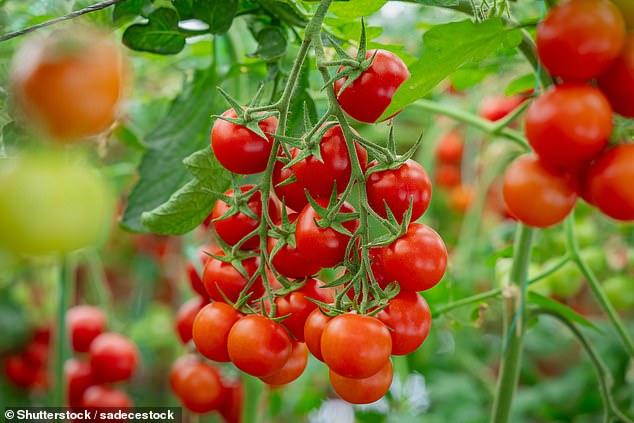
The Italian Ministry of Health has implemented a sampling and testing plan to detect the bacteria in varieties of cherry tomatoes sold in Italy
The research was led by a team at the European Centre for Disease Prevention and Control (ECDC), who found that the majority of outbreak cases occurred between 2023 and 2024.
Writing in the journal Eurosurveillance, they said the true number of infections is likely ‘substantially higher’ since not all countries involved in the outbreak participated in the study.
‘Stringent control measures at the source are needed to stop the contamination and prevent future cases,’ the paper reads.
Amid the rising number of cases, Italian health chiefs have rolled out an urgent sampling and testing programme on two varieties of cherry tomatoes sold domestically.
Separate data, recently provided by the UK Health Security Agency, reveals there have been nearly 30 cases of Salmonella Strathcona recorded in Britain as part of the latest outbreak.
The ECDC have said the situation is an ongoing, seasonal outbreak with most cases occurring in the summer months, particularly between June and October.
‘The recurrence of cases in 2025, including those without travel history, suggests ongoing transmission and distribution of contaminated produce beyond Italy,’ they added.
‘The presence of cases in multiple countries underscores the need for continued surveillance and cross–sector coordinated response.’
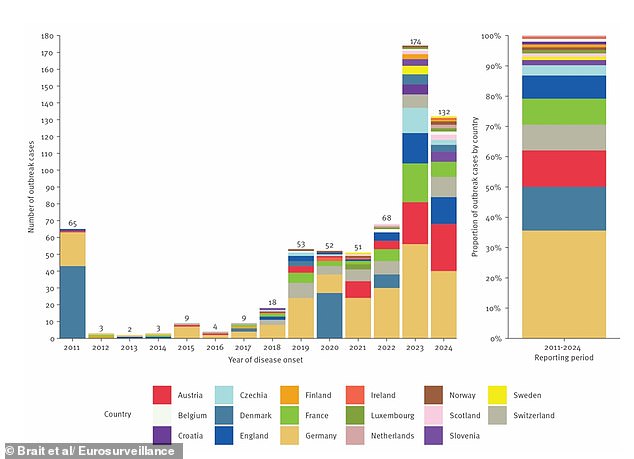
The number of outbreak cases of Salmonella Strathcona across recent years. 2023 and 2024 have recorded the higher number of confirmed cases
Experts say tomatoes may be especially vulnerable because of their texture, which allows bacteria to cling to the surface.
The danger is heightened as they are often eaten raw rather than cooked, which would normally kill off harmful bugs.
While most cases clear within days, Salmonella can sometimes prove fatal especially in vulnerable groups with weakened immune systems.
In serious cases, patients may need hospital care because of the risk of dehydration.
The bacteria examined in the study, Salmonella Strathcona, is an uncommon strain of the bug that is particularly severe.
‘Salmonellosis is often caused by eating or handling contaminated food and can be rarely spread from person–to–person,’ Gauri Godbole, deputy director and gastrointestinal infections specialist at the UKHSA said last month.
‘Anyone concerned about symptoms should contact their GP or out of hours service in the first instance.
‘There are simple steps to stop the spread of salmonella: wash your hands thoroughly after using the bathroom and before preparing and handling food, cook food thoroughly, and if you have symptoms avoid handling food for others where possible.’