Finally, a victory for common sense. That was my first reaction to the news that the Metropolitan Police will no longer investigate so-called non‑crime hate incidents (NCHIs).
So-called because, of course, there is no such thing. Either something is a crime under British law, or it isn’t.
However, that hasn’t stopped the police – an institution already on its knees – wasting endless time (around 60,000 hours a year, by the reckoning of think tank Policy Exchange) and public money policing people’s opinions instead of actual law-breaking.
Now, at last, the Met has binned these absurd investigations. And the case of Father Ted co-creator Graham Linehan and his tweets about trans activists was seemingly the straw the broke the camel’s back.
For those fortunate enough never to have had one of these incidents recorded against them, let me explain how sinister this is.
Up until July this year, police had recorded or investigated a staggering 133,000 NCHIs, often on the say so of a single anonymous complainant objecting to someone’s opinion or conversation.
It can mean being investigated in secret without you knowing. It can mean police turning up at your door, intimidating you out of the blue. It can mean police logging a black mark against you. All for expressing your opinion.
In 2019 Harry Miller, a former police officer, found himself under investigation after a stranger reported one of his tweets as ‘transphobic’. One of Harry’s ‘offensive’ comments was: ‘I was assigned mammal at birth, but my orientation is fish. Don’t mis-species me.’ It was recorded against him as a non-crime hate incident.
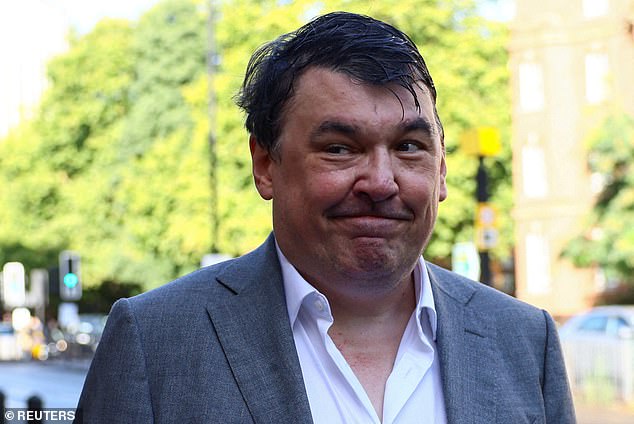
The case of Graham Linehan (pictured outside Westminster Magistrates Court in September) seemingly led to so-called non‑crime hate incidents no longer being investigated
Sinister
Miller challenged this in court and ultimately won his case when a Court of Appeal judge condemned police actions as a ‘disproportionate interference’ with free expression.
Yet, astonishingly, the secret logging of NCHIs was allowed to continue.
The experience of my fellow women’s rights campaigner Helen Joyce was even more sinister; she wasn’t even told that an accusation of criminal harassment had been placed on her record after a trans activist – and well known agitant – reported her to Greater Manchester Police for referring to another trans activist as a ‘man’ and a ‘fetishist’. She’s still trying to get this overturned.
The aggressive trans lobby has found particular succour in this snoopers’ charter, and I speak from experience. In 2019 two uniformed officers turned up at my home on a Sunday afternoon.
They told me a complaint had been made by a person who identified as transgender – someone who did not even live in the UK – claiming to have been ‘offended’ by something I’d said online.
The officers asked if I’d submit to a voluntary interview, which I refused. I told them they would have to arrest me. After ‘speaking to the sergeant’, they dropped it.
I count myself lucky. I have a secure home, a partner who happens to be a lawyer and I know my rights. But many others do not. People I’ve spoken to are terrified for their livelihoods simply because they have expressed a view now considered heresy by the trans movement.
One can only imagine the intimidation felt by school worker Helen Jones when police visited her home in Stockport last February. Her ‘transgression’ was to have criticised a Labour councillor for the offensive comments he made about a pensioner on a WhatsApp group.
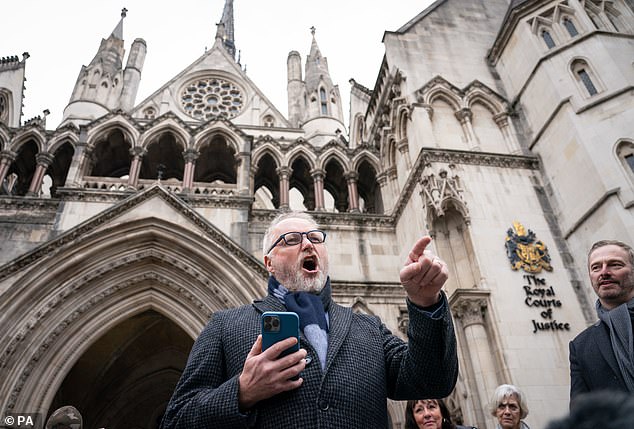
Former police officer Harry Miller (pictured outside the Royal Courts of Justice in 2019) was investigated six years ago after a stranger reported one of his tweets as ‘transphobic’
The officers at her door admitted no crime had occurred, but said they were nevertheless ‘obliged to act’.
Obliged by whom? Certainly not by the law, as the Human Rights Act not only permits the right to offend, but even for us to abuse each other.
At times, the actions of these ‘thought police’ have been farcical. Officers have turned up to investigate a window display featuring Enoch Powell at an ironmongers
in Shropshire; logged an argument on Snapchat after a schoolgirl was called a ‘Polish t**t’ by a fellow pupil; and recorded a rude word being spelled out using alphabet cups in a supermarket.
Victimhood
The fact is that such behaviour by those charged with keeping law and order is an authoritarian obscenity that should never be allowed in a liberal democracy.
Like many dystopian projects, the NCHIs introduction is rooted in virtue.
Its architects wanted to improve society, to record primarily incidents of racism that didn’t meet the threshold of a crime. This followed the Macpherson Report of 1999 into ‘institutional racism’ in the Met Police over its mishandling of the investigation into the murder of Stephen Lawrence.
Back then, however, no one could have predicted the rise of social media as a vector for every grievance going, be it causing racial offence, being unkind to disabled people or misgendering a trans person.
But instead of applying the brakes to this runaway train of victimhood, non-crime hate incidents were codified into police guidance in 2014.
What followed was a descent into not institutional racism but institutional cowardice – as police have turned up at people’s homes to scold them for anything that someone had deemed offensive.
The NCHI farce reached its shameful apex last month with the case of Graham Linehan – a man whose courageous efforts to expose transgender ideology as extremely harmful led to the destruction of his career and marriage.
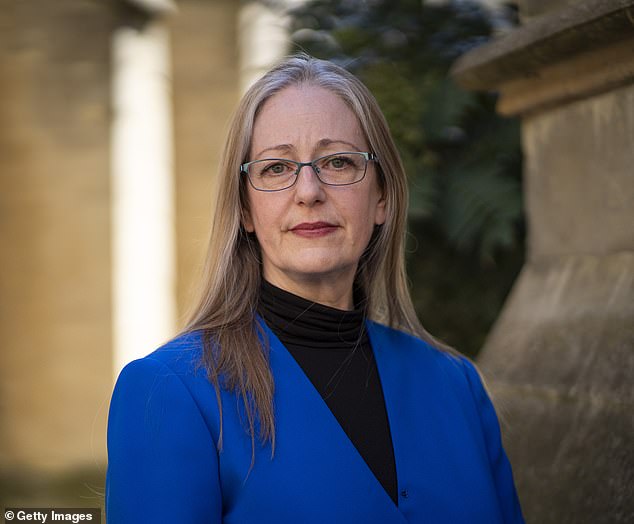
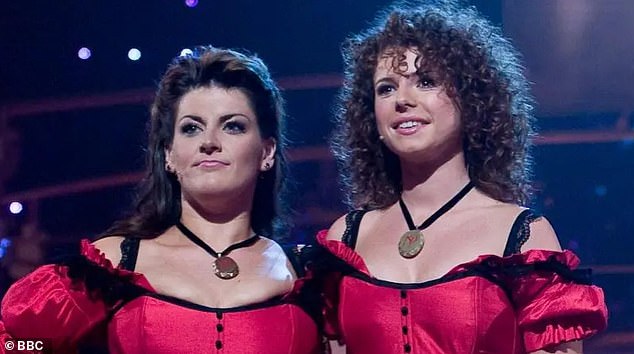
Women’s rights campaigner Helen Joyce (pictured in April of this year) was reported her to Greater Manchester Police for referring to another trans activist as a ‘man’ and a ‘fetishist’
Five armed officers hauled him to a police cell after he’d disembarked from a plane at Heathrow, treatment so over-the-top he said later that he felt he was being accused of terrorism.
Scotland Yard was convinced it had got its man for ‘inciting violence’ with three posts on social media directed at trans activists. But following a public outcry, the force downgraded a potential public order criminal offence to a NCHI before the Crown Prosecution Service abandoned the case altogether.
As horrific as Graham’s experience was for him, it did us a favour, because it again exposed the yawning chasm between what the public expect their police to do, and what they actually do.
What an absurd and offensive waste of resources NCHI policing has been while we read endless reports of shoplifting and burglary going ignored, and the average rape case takes three years to get to court. As for real online crime, where is the policing of websites that incite violence or post heinous videos showing abuse of children?
Absurd
When tackled about their failures on genuine crimes, police chiefs invariably complain about funding issues. Which makes their decisions to send uniformed officers mob-handed to the doorsteps of people who put their opinions on social media all the more nonsensical.
Perhaps the penny has finally dropped with the Met’s decision to no longer investigate NCHIs.
There are signs in other areas of life that common sense is making a comeback – for instance, the move this week of the Oxford Union to oust its president-elect George Abaraonye, whose ‘celebration’ of the assassination of Right-wing US political campaigner Charlie Kirk insulted the very idea of a debating society.
And in April the Supreme Court ruled that the legal definition of a woman is based on biological sex.
While the public have long been alive to the absurdity of policing hurt feelings, the Met is starting to wake from this Orwellian fever dream that has gripped them for over a decade.
Now every other police force in Britain should follow its example and abandon this shameful practice.