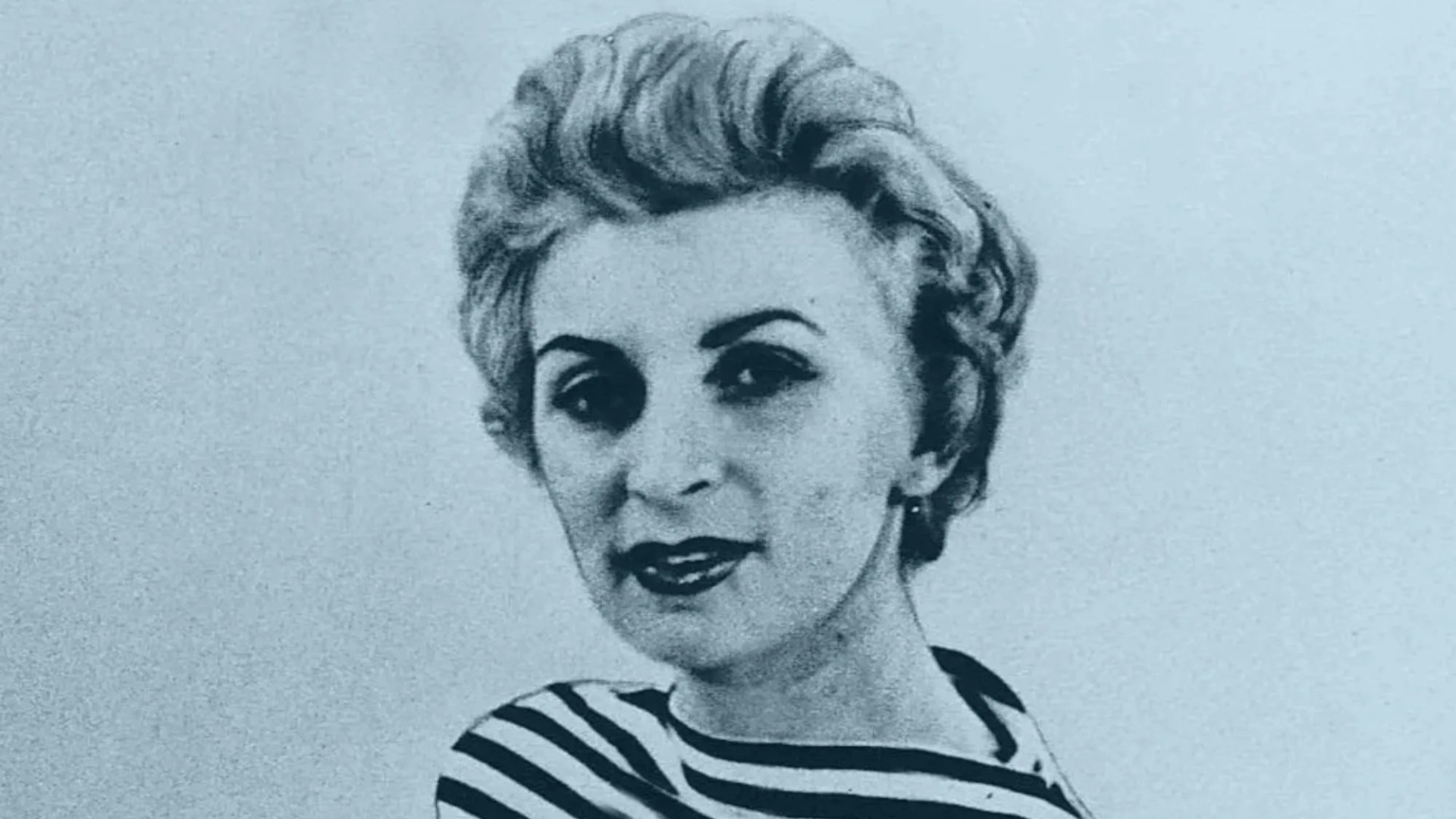
FOR more than 70 years, the hanging of Ruth Ellis has been a stain on our criminal justice system.
The 28-year-old nightclub hostess became the last woman in Britain to be executed when she went to the gallows in 1955 for fatally shooting her lover David Blakely.
There has never been any dispute that Ellis killed racing car driver Blakely outside The Magdala Pub, in Hampstead, North London, on Easter Sunday that year.
However, controversy has raged over whether Ellis — a victim of emotional, sexual and physical abuse by Blakely and others — was fully responsible for her actions.
Yesterday, Ellis’s grandchildren submitted an application to Justice Secretary David Lammy asking him to recommend the King grants a posthumous royal pardon to her.
The application details the abuse suffered by Ellis, failures by the police and her own defence team and the then-Home Secretary’s refusal to grant a reprieve. being motivated by his resistance to the repeal of the death penalty.

Two years after Ellis was hanged, the law changed to recognise diminished responsibility as a mitigating factor under the Homicide Act of 1957.
Ruth was a single mother of two children, Andy and Georgina, aged ten and three, when she was executed.
Andy went on to kill himself, aged 37, while heavy-drinking mother-of-six Georgina died from cancer aged 50.
The application to pardon Ellis is being brought by four of Georgina’s children, Laura and James Enston, and Stephen and Chloe Beard.
Laura, 46, said: “Ruth’s execution has had a devastating impact on our family.
Modern woman
“My mother and uncle suffered from trauma from which neither of them were able to recover, and as grandchildren we have felt these ripple effects.
“The evidence shared with the Justice Secretary makes clear that the punishment did not fit the crime.”
Mother-of-two Laura added to The Sun that a pardon would also change the public perception of Ruth, from a good-time girl to a trailblazing modern woman who was cruelly abused by the men in her life and failed by the law.
She said: “My mother always thought of my grandmother as this fictitious character who was a beautiful nightclub hostess.
“But she was a very modern woman, working full-time managing a reputable club frequented by celebrities while looking after her two young children.”
Ellis’s short life was one of tragedy and cruelty.
She was born in Rhyl, North Wales, on October 9, 1926, the fifth of six children to dad Arthur Hornby, a cellist on a cruise liner, and mum Bertha, a Belgian refugee.
Ruth was on trial not just for murder but for what she represented
Laura Enston
The family moved to Basingstoke, Hants, when she was a child and Ellis was sexually abused by her father, who also raped and impregnated her older sister Muriel.
Ellis moved to London aged 15 and two years later became pregnant with Andy by a Canadian soldier, who abandoned her soon after she gave birth.
She had several factory and clerical jobs but in the late 1940s she became a nightclub hostess in Soho and topped up her money as an escort.
She became pregnant by one of her clients, divorced dentist George Ellis, and married him. He was a jealous, abusive and violent alcoholic.
After leaving him, Ellis went back to working as an escort before landing a job as manager of the Little Club, in Knightsbridge, central London.
There she met handsome former public schoolboy Blakely, who soon moved into her flat above the club.
Ellis’s granddaughter Laura said: “When David Blakely came into her life everything started to unravel.
“He was upper class but sponged off her and spent all her money.
“He was also beating her up and was coming in and out of her life.”
Ellis then embarked on a relationship with former RAF pilot and accountant Desmond Cussen and moved into his central London home.
But she continued seeing Blakely.
At one point she suffered a miscarriage after he punched her in the stomach during a row. Ten days later she snapped and shot him dead.
Laura said: “We now know the extent of the abuse which my grandmother suffered. There are medical records and witness statements which were not available at her trial.”
We now know the extent of the abuse which my grandmother suffered. There are medical records and witness statements which were not available at her trial
Laura Enston
On April 10, 1955, Ellis went to The Magdala, where Blakely and a friend were drinking. As they emerged from the pub at 9.30pm, she fired six shots with a .38 Smith and Wesson.
The first bullet missed Blakely as he tried to run. When the second brought him to the ground, Ellis stood over him and fired three more into him. Her sixth missed and hit a female passer-by in the hand.
Ellis waited at the scene and was arrested by an off-duty policeman, apparently mumbling: “I am guilty, I’m a bit confused.”
She appeared for trial at the Old Bailey on June 22 that year in front of judge Sir Cecil Havers, grandfather of actor Nigel, who played him in ITV drama A Cruel Love: The Ruth Ellis Story, screened earlier this year.
‘Upper-class victim’
Her story was also told in 1985 film Dance With A Stranger, starring Miranda Richardson and Rupert Everett.
Ellis’s defence team were denied the opportunity to use the argument of provocation and she sealed her fate when asked by the prosecutor what she intended when firing the gun and replying: “It’s obvious when I shot him I intended to kill him.”
Her trial lasted just over one day and the jury took less than 15 minutes to convict her. She was executed 22 days later
Laura Enston
Her granddaughter Laura said: “Ruth was on trial not just for murder but for what she represented.
“Back in the 1950s women were expected to be at home. But Ruth was a full-time working mum and an independent woman.
“The police statements portray her as a jealous, cold-blooded killer who wanted revenge, while Blakely was painted as the upper-class victim.
“Her trial lasted just over one day and the jury took less than 15 minutes to convict her. She was executed 22 days later.”
Ellis was hanged by Albert Pierrepoint, who was also the executioner in the high-profile miscarriages of justice of Timothy Evans and Derek Bentley.
It later emerged that just 16 hours before Ellis was hanged, her solicitor John Bickford told police and the Home Office how her live-in partner Cussen had driven her to see Blakely and provided the murder weapon.
If a reprieve were granted in this case, we should have to seriously consider whether capital punishment be retained as a penalty
Home Secretary
Investigating Cussen’s involvement would have meant using Ellis as a witness — and reprieving her.
In a document later released by the Public Records Office, the Home Secretary said: “If a reprieve were granted in this case, we should have to seriously consider whether capital punishment be retained as a penalty.”
Bickford’s fees were paid by Cussen, and before his death, the solicitor admitted he was wrong to have withheld evidence from her trial.
The case also played on the conscience of trial judge Sir Cecil, who sent money to Ellis’s son Andy for years, while prosecutor Christmas Humphreys paid for his funeral.
Ellis accepted her fate, writing a final letter to Blakely’s parents, saying: “I have always loved your son, and I shall die still loving him.”
But her sister Muriel campaigned to overturn the conviction until her own death in 2018.
In 2003, the Court of Appeal rejected the bid on the grounds that the original trial judge had not erred under the law at that time.
Grace Houghton, solicitor at legal firm Mishcon de Reya, representing the family, said the Justice Secretary this time has more flexible powers to consider a pardon as the domestic violence suffered by Ellis is now recognised by the law.
A Ministry of Justice spokesman said: “The Justice Secretary considers all applications in line with the longstanding conventions which govern use of the prerogative.”
PUT TO DEATH BY MISTAKE
BRITAIN’S court system is envied across the world but it has also been witness to some scandalous miscarriages of justice.
Nineteen-year-old Derek Bentley was hanged for his part in the murder of a policeman during a warehouse burglary in Croydon, South London, in 1952.
His accomplice, Christopher Craig, then 16, fired the gun, but Bentley was also convicted under the legal principle of joint enterprise.
His story featured in 1991 film Let Him Have It, starring Christopher Eccleston.
The film’s title refers to the ambiguous phrase Bentley, who was given a royal pardon in 1993, shouted out before the fatal shot, with supporters arguing Bentley was actually telling his accomplice to hand over his weapon.
In 1950, lorry driver Timothy Evans was hanged for the murder of his wife Beryl and year-old daughter Geraldine at their home in Notting Hill, West London.
Both were strangled at the property, 10 Rillington Place.
Evans, 25, was convicted after compelling evidence from his neighbour John Christie.
But three years later, it emerged that Christie was a serial killer who had committed the murders and also killed his own wife, Ethel, and five other women.
Evans was posthumously pardoned in 1966.
In 1923 at Holloway Prison, 29-year-old Edith Thompson was executed for the murder of her husband Percy.
Less than a mile away at Pentonville jail on the same day, her lover, 20-year-old Frederick Bywaters, was also hanged for the killing.


Bywaters had insisted that Thompson had no idea he was going to kill Percy, but she was convicted after a jury was shown letters in which she wrote about longing to be free of her husband.
Ministers are now considering a pardon for Thompson, which was submitted two years ago.