The ongoing US government shutdown will force the agency overseeing the nation’s nuclear arsenal to furlough workers for the first time in history, increasing pressure on Donald Trump to end the stalemate in Washington.
The National Nuclear Security Administration will today give notice to 1,400 staff, with fewer than 400 to remain as the government shutdown drags into a 20th day.
Department of Energy Secretary Chris Wright confirmed the extraordinary move, describing the impacted employees as ‘critical to modernizing our nuclear arsenal.’
The agency is responsible for national security and the primary mission of employees is to ensure the United States has a healthy stockpile of nuclear weapons, as well as to prevent and monitor nuclear proliferation around the world.
Nearly 400 workers will remain at the NNSA during the shutdown.
It marks the first time in history the NNSA has been impacted by lapses in funding, Energy Department spokesperson Ben Dietderich told CNN.
‘Since its creation in 2000, NNSA has never before furloughed federal workers during funding lapses,’ Dietderich said. ‘We are left with no choice this time. We’ve extended funding as long as we could.
‘The longer the shutdown lasts, the more damaging and dire the consequences will be for workforce retention and weapons modernization efforts critical to national security.’
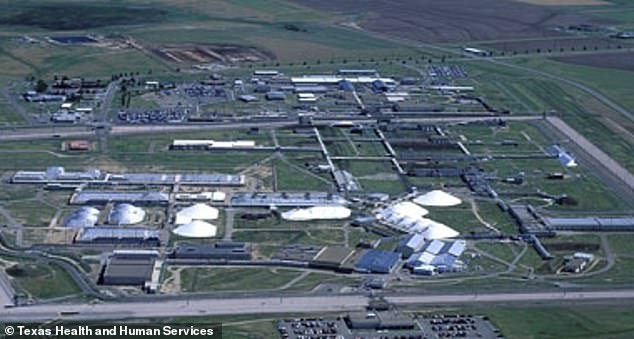
Pantex in Texas (pictured) will be among the hardest hit by the furloughs beginning on Monday, insiders say
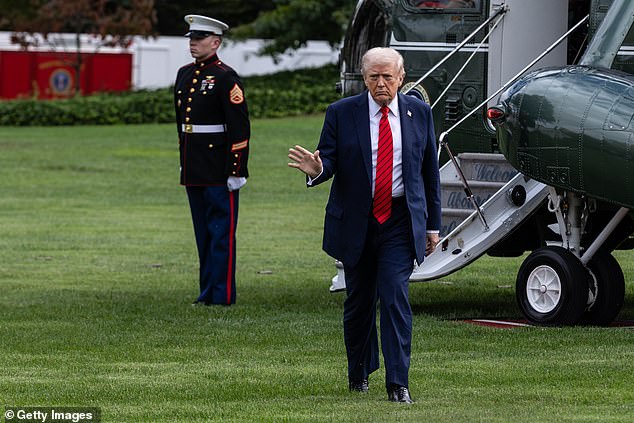
The Trump administration will on Monday begin furloughing employees at the National Nuclear Security Administration as the government shutdown drags into a 20th day
The furloughs will begin at NNSA sites responsible for assembling nuclear weapons -Pantex in Texas and Y-12 in Tennessee – and will effectively force the locations to enter a safe shutdown mode.
A second source told CNN contractors will continue to undertake the work they can until they run out of money, but that could happen as soon as October 28.
From that point onwards, the Department of Defense is at serious risk of failing to receive weapons deliveries.
‘Everything would be locked up,’ the source said.
The NNSA works around the world to secure dangerous nuclear materials, including in Ukraine as the war with Russia drags on. Back in June, the US struck Iran’s nuclear facilities in an effort to set back the nation’s nuclear capacity.
The process of stopping work mid-operation is also potentially dangerous and time consuming.
‘To stop in the middle of disassembling or building a nuclear weapon, there are several steps you must take to ensure everything is safe enough to leave and lock up,’ the source said.
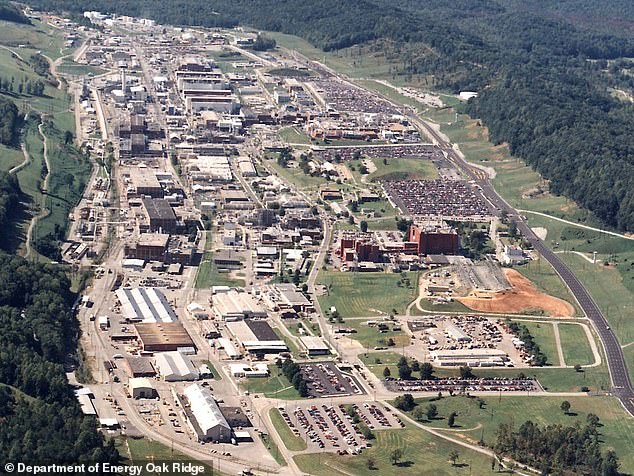
Y-12 in Tennessee (pictured) is also expected to be hit hard by the government shutdown
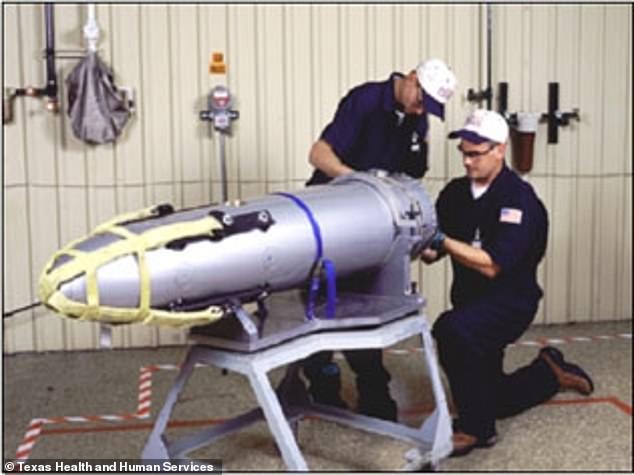
The facilities are responsible for assembling and storing America’s nuclear weapons arsenal (pictured, employees at Pantex)
‘And then when you come back, you have to do all of that in reverse to restart. It takes time, it’s not like flipping a light switch.’
Daryl Kimball, the executive director of the Arms Control Association said the NNSA performs essential work for ‘nuclear facility safety and security.’
He said: ‘I am sure they can find the funds to keep the workers on the job, or else they might want to rethink their position on the federal government shutdown.
In spite of the mounting concerns, insiders have assured the American public that there is no immediate concern for national security.
‘The nuclear stockpile today is reliable and can accomplish what it’s designed to do,’ they said.
‘But if we can’t continue our modernization, refurbishing, doing surveillance, then it’s the reliability of the stockpile that’s affected, and it’s going to take some time to play catch up on all of that work.’
Security staff will remain on the job to guard the facilities and the weapons.
NNSA’s federal staff oversees some 60,000 contractors maintaining and testing weapons at national laboratories and other locations across the United States.
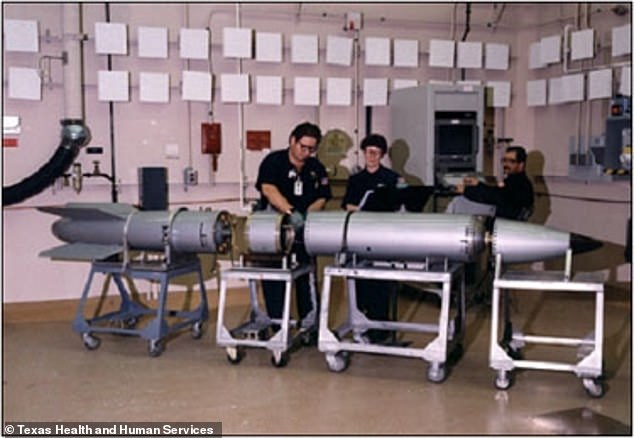
NNSA’s federal staff oversees some 60,000 contractors maintaining and testing weapons at national laboratories and other locations across the United States. Pictured: Employees handling a weapon at Pantex facility in Texas
Wright warned there could be tens of thousands of layoffs of contractors along with furloughs of staff workers due to the shutdown, now on its 20th day.
‘We’re just getting momentum… To have everybody unpaid and not coming to work, that will not be helpful.’
The costs of operating and modernizing America’s nuclear forces through 2034 are projected to soar to $946 billion, 25 percent higher than a 2023 estimate, a report by the non-partisan Congressional Budget Office said in April.
Nuclear weapons expenditures are divided between the Pentagon and the NNSA.
Wright will address the impacts of the shutdown on the nation’s nuclear weapons arsenal when he visits the National Nuclear Security Site in Nevada on Monday.
The shutdown began on October 1 and there have been 10 failed attempts to lift the restrictions.
According to the Congressional Budget Office, as many as 750,000 federal employees faced furlough each day of the shutdown.
Furloughed employees do not return to work until the shutdown ends, but some staff are considered exempt and must still show up for work to perform essential services.
Federal workers impacted by the shutdown are facing a month or longer without getting paid, but Trump stepped in last week to ensure the nation’s 1.3million active duty service members would be unaffected.
He directed the Pentagon to ensure troops were still paid amid the ongoing shutdown, which is rapidly approaching the 35-day shutdown record set during Trump’s first term.
The Federal Aviation Administration has reported air controller shortages in cities across the nation, from airports in Boston and Philadelphia, to control centers in Atlanta and Houston.
Flight delays have also spread to airports in Nashville, Tennessee, Dallas, Newark, and New Jersey.
Democrats have maintained Trump must step in to find a compromise and end the shutdown.
Republican leaders are refusing to negotiate until a short-term funding bill to reopen the government is passed, while Democrats say they won’t agree without guarantees on extending health insurance subsidies.
Spokesperson Karoline Leavitt said Democrats must first vote to reopen the government, ‘then we can have serious conversations about health care.’
Senate Majority Leader John Thune echoed that approach, saying Trump is ‘ready to weigh in and sit down with the Democrats or whomever, once the government opens up.’