Let us try, in a charitable spirit, to enter the mind of Rachel Reeves and see whether we can help her.
Since becoming Chancellor 15 months ago, she has endlessly repeated that economic growth is her priority. But growth is the one thing she still hasn’t got, and no reputable forecaster believes it is even on the horizon.
Rachel thinks that tearing up the planning laws, and carpeting southern England with new houses, will boost growth, although there’s little evidence that this is so. In any case, house-building has declined under Labour.
The Chancellor is also happy to prostrate herself before the Chinese Communist Party, and for it to have a new super-embassy in the City of London bristling with listening devices. Security is bartered for growth, but it’s a dangerous illusion. Chinese investment and trade won’t rescue the British economy.
Not all her ideas are useless. She is trying to promote investment in artificial intelligence. She supports a third runway at Heathrow. She would like less red tape strangulating business.
But none of these welcome measures – if they ever happen – is going to produce the growth on which she has set her heart and about which she never stops talking.
Rachel Reeves is a bit like an alchemist who goes on trying to turn lead into gold, or some poor soul who believes that strapping a few chicken feathers on his back will enable him to soar into the firmament. It won’t work.
Yet there is a solution. When it’s dangled in front of her by Right-wing economists, Rachel is likely to be suspicious, for she is a tribal creature steeped in Left-wing dogma. But when the idea of lower tax is delivered to her by the most politically astute prime minister ever produced by Labour, she should listen.
I am speaking of Tony Blair. A bad leader in many ways. He involved this country in disastrous wars in Iraq and Afghanistan. He fostered mass immigration. He vandalised the British constitution. He was, to put it mildly, not entirely trustworthy.
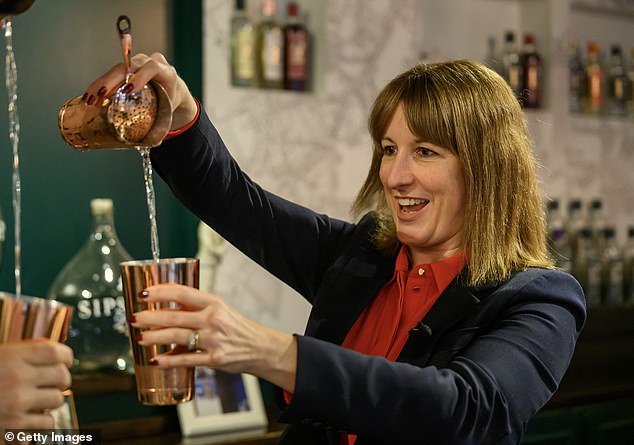
Rachel Reeves is a bit like an alchemist who goes on trying to turn lead into gold, writes Stephen Glover
But we must be fair. Unlike previous Labour prime ministers, and the dolt now occupying No 10, Blair didn’t cause economic decline. On his watch, although doubtless more due to the efforts of Gordon Brown, the Chancellor, than to his own, there was strong growth.
During his prime ministership, Britain grew at an annual average of just over 3 per cent – a figure Rachel Reeves would die for. Britain outperformed Germany, and left France trailing behind.
There were several reasons for this stellar performance. The main one was that Blair and Brown largely preserved the relatively low tax regime they had inherited from the Tories, which had been radically reshaped by successive Conservative administrations in the 1980s.
When Margaret Thatcher became PM in 1979, the top rate of tax on earned income was 83 per cent. When she was toppled by idiotic Tories in 1990, it stood at 40 per cent – and so it remained throughout Blair’s tenure.
The basic rate of income tax also fell in the Thatcher years – from 33 per cent to 26 per cent. Between 1983 and 1988 the economy expanded by an average of more than 4 per cent a year.
Blair understands that an economy freed from punitive rates of taxation, and particularly one enjoying a much reduced top rate of tax, is liable to generate greater enterprise, investment and hard work. So it proved – for Thatcher and for him.
Now the former prime minister re-enters the fray, reportedly telling the authors of Prosperity Through Growth, a new book about the British economy, that he believes the top rate of income tax should be cut to below 40 per cent from the current rate of 45 per cent.
He is said to have opined that direct taxes, such as income tax and National Insurance, are extremely high in historical terms, and that the state isn’t making good use of taxpayers’ money.
Although Blair isn’t reported to have said that excessive public expenditure should be cut, the implication is that it should be. The Tories claim £8 billion a year could be saved by cutting the number of civil servants to 2016 levels. They have plausibly identified £23 billion in annual savings to the bloated welfare budget.
It’s mystifying that Rachel Reeves won’t acknowledge the truth that low tax economies that control public spending always perform better than high tax ones that don’t.
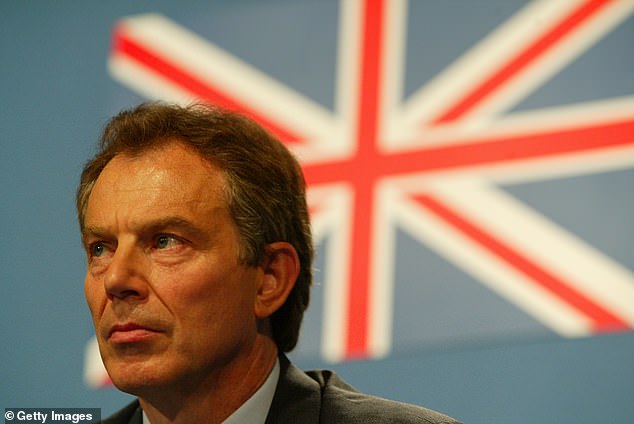
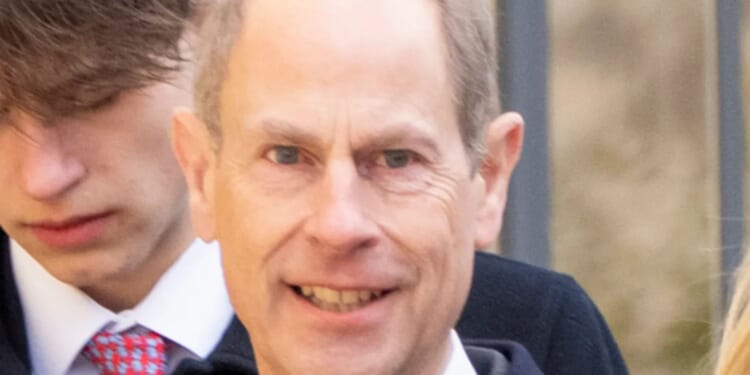
During Sir Tony Blair’s prime ministership, Britain grew at an annual average of just over 3 per cent. Pictured: The then-PM in 2003
I expect she is either ignorant about, or dismisses, the American economist Arthur Laffer, one of the authors of Prosperity Through Growth to whom Blair confided his misgivings.
Laffer is famous for the Laffer Curve, which holds that governments can increase tax revenue by cutting tax rates, which stimulates growth and increases the overall size of the economy.
Our stubborn and blinkered Chancellor thinks differently. Her course of action is to raise taxes even higher and to do little or nothing about public expenditure. She mutters inanely about ‘those with the broadest shoulders paying a fair share of tax’, which almost certainly will entail some sort of wealth tax on assets.
Her latest reported plan is to create new council tax bands for more valuable homes in next month’s Budget. This would penalise thousands of older homeowners who are asset rich but income poor.
They are reluctant to downsize because they don’t want to pay stonking stamp duty on a new home. They are trapped. Along comes Rachel Reeves with a plan – if reports are correct – to make them pay more for living in their own homes with money they haven’t got. Their shoulders aren’t broad.
Why can’t Rachel Reeves understand that the growth she yearns for isn’t achievable with the tax burden at record levels for peacetime, and public spending close to being so? Why won’t she and Sir Keir Starmer listen to Tony Blair, who for all his faults did at least preside over a successful economy?
There’s a huge, gleaming lever in front of her, marked ‘lower taxes and reduced public spending’, which she won’t pull. Is she frightened of economically illiterate Labour backbenchers, who scuppered her modest plans to trim welfare earlier in the year? Or is she just not very bright?
For unfathomable reasons, she has hired Labour MP Torsten Bell to help her prepare her Budget. Torsten isn’t stupid but he is certainly deeply misguided, and his advice is likely to scuttle Rachel Reeves’s ministerial career and his nascent one, while finishing off the country.
In a book published last year, Bell argued that increases in taxation are ‘unavoidable’ and that ‘anyone serious about governing Britain’ should plan on taxes ‘remaining at higher levels’. These are the policies of a madhouse.
Lower taxes and reduced public expenditure. It’s pretty simple, but our growth-obsessed Chancellor can’t see it. The authors of Prosperity Through Growth forecast that on present trends the per capita income of Poland will surpass that of the UK in 2034. Turkey will overtake us in 2043, and Malaysia around 2050.
All these countries have lower income tax rates and lower public spending. The path to economic growth isn’t a mystery but Rachel Reeves is still too bone-headed to take it.