
★★★★☆
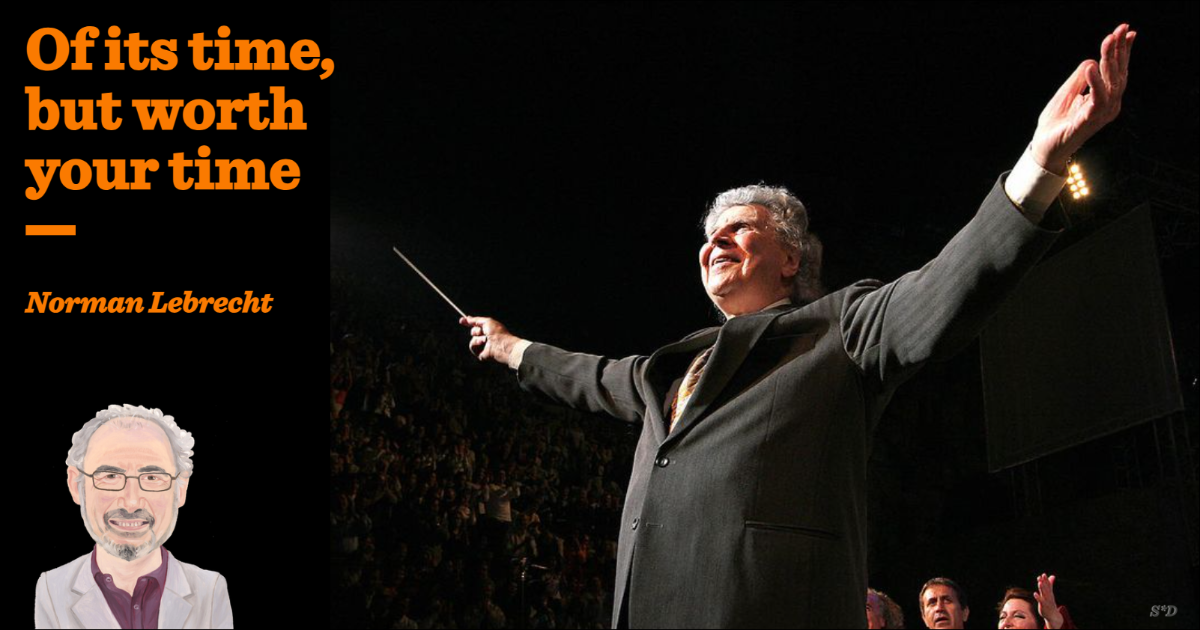
The great Greek composer is known for unforgettable film scores — Zorba, for instance — and overwhelming song cycles — Ballad of Mauthausen — each of them amounting to a cultural history of his country in the 20th century. Theodorakis, who died in 2021, was politically active to the last.
His concert music was overshadowed by his status as national icon and prisoner of conscience. Theodorakis was twice held in concentration camps, during the civil war of the late 1940s and under the colonel’s regime two decades later.
The manuscript of his first symphony was mislaid in his 1949 incarceration, rewritten in a second camp and completed in freedom as a student in 1954. The composer then went to Paris, where he attended Messiaen’s class at the Conservatoire and formed a tight friendship with his compatriot, the ultra-modernist Iannis Xenakis.
The first symphony emerges as a naïve work by a sentimental young man, secure in his beliefs and adept at arresting attention with large themes. The middle movement veers from sad to hopeful. The outer movements owe much to the war symphonies of Dmitri Shostakovich, to the point of fawning quotation.
This symphony is well worth half an hour of your life. It is dramatic music, very much of its time, but unpretentious, well written and identifiably Hellenic in its plangent melodies and irremediable yearning. The Freiburg Philharmonic play with vigour and enthusiasm for conductor Ektoras Tartanis, with superb sound engineering by Southwest German Radio. A real find.