Dear Children’s Commissioner,
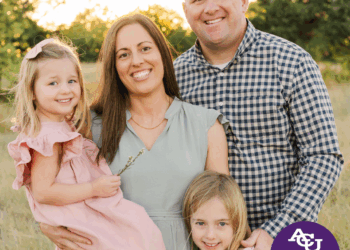
I am writing with reference to your prominent and ongoing involvement in the sweeping changes the Labour government is leading in education and family life. I write as a husband and a father in a single-income, home educating family. I don’t have a team of communications professionals and researchers at my beck and call. I don’t have the ear of powerful figures in Whitehall, and I don’t head an influential campaign group. I write as an ordinary citizen who sincerely hopes that his grandchildren will have the opportunity and freedom to educate their children personally, without statutory government involvement — something which is very much in doubt at present.
Labouring with Labour
As you know, the Labour government is affecting a revolution in the interlinked areas of family life and education. It seeks to make it harder for parents to send their children to non-state school settings, by taxing independent schools (in consequence over 50 schools have announced closure) and seeking oversight of informal, parent-led learning groups and cooperatives. At the same time, it is legislating to create Children Not in School (CNiS) registers, which mandate that home educating parents partner with government officials to create and maintain a case file on their own children, a file composed of detailed information about them, their home and family, and their education. Parental cooperation will be coerced (there’s no other word for it) by the threat of criminal proceedings and school attendance orders in the event of non-compliance or failure to keep these records updated. Finally, and in the same bill, the Children’s Wellbeing and Schools Bill, the government is considering implement digital ID — a common identifier — for all children in the land. Judging by the public reaction to digital ID for adults, I can only assume that most people haven’t heard of the Children’s Wellbeing bill.
The changes proposed could not be more radical. They amount to a fundamental change to our national constitution, enshrining a new legal and social reality: the state, and not parents, will now be primarily responsible for the wellbeing and formation of children. From now on, the state will be statutorily involved with every child in the country — whether there are safeguarding concerns or not — and will have digital eyes to see and make decisions about each one of them. You have been vocal in your calls for these measures, and there is evidence to suggest that many preoccupied MPs, with little real time to scrutinise these recommendations, support them because you do.
The bill is a vehicle, dressed up in the language of moral responsibility, for the breakdown of the division between the private and the public
Principles and facts
In my view, these radical constitutional changes are illegitimate on principle, and unjustified in point of fact. First to the principle: it is not the role of the state to oversee the formation of children. As a Christian, I am taught that the state has God-given authority to exercise public justice and righteousness, but parents have the responsibility to nurture, teach, and protect their children. As a citizen of a democracy, I understand that the separation of powers and legal protection for family and private life protect us from tyranny. Is there a greater separation of powers than that which separates the domestic sphere from the political? Is there an institution more opposed to unchecked state power than the family as constituted by God? You have said that “it is vital that we [the representatives of the state] know where all children are.” With respect, it is not. Children should be seen, heard, known and loved by their parents and their extended families — the state has no mandate from heaven to be an “all-seeing eye.” So much for principle. What about fact?
We are told — you have told us — that the measures in the bill are justified because of safeguarding. One wonders at times if there are any government measures which could not be justified by “safeguarding concerns.” You have suggested repeatedly that home education puts children at risk and that a register of all children not in school will make children safer. Both claims remain conjectural. Child abuse remains a sad reality, one which we must robustly address in law and in society, but there is no statistical trend bearing out the idea that home education is, as a factor considered on its own merits, a safeguarding risk. Further, research by Joanna Merrett of the University of Exeter found that data relied upon by the government relating to child protection Serious Case Reviews included multiple cases incorrectly tagged as relating to home education.
You also suggest that a register would protect children. But this isn’t indicated by the data, either. For it to be even a plausible solution, there would need to be evidence of at-risk children who were being electively home educated and who were completely unknown to social services. Again, the data fails to show a correlation here, let alone causation. When asked in January if he had seen evidence of home educated children who were not already known to social services suffering abuse, the Minister for Early Education was unable to provide such evidence.
The fact is that the sweeping changes that you have called for are unjustifiable in terms of principle and unjustified in point of fact.
Public misrepresentation
Rather than acknowledge this, you have repeatedly misrepresented the nature of the safeguarding issue in your zeal for compulsory registration and child ID. I refer to two specific occasions which illustrate general trends in your — and the government’s — communications.
Last December, when the father, stepmother, and uncle of Sara Sharif were sentenced for their horrific crimes in abusing and killing her at the age of ten, you made a significant appearance on Sky News. You noted, correctly, that Sara ought to have been protected because she had been known to child protection authorities before her birth. Inexplicably, you found fault not with these services, but used the occasion, as did Education Secretary Bridget Phillipson on other news channels, to push for a register of children not in school. You knew that this register would not have helped Sara, and yet used her death to push for this policy (and a smacking ban). Abused in life, Sara was shamefully used in death to promote policies which would not have helped her in any way.
A second occasion, a month before the above, was your appearance before the Education Select Committee. Commenting on a “home education register” you said: “I need it to happen; I need it to happen now.” You expressed your hope that the register could help to get children back in school who (in your view) need to be in school. That comment was interesting because many MPs, following the Department for Education’s position, have insisted that the register is “just a register”, and not a basis for government interference. Home educators, by contrast, have insisted that there is no such thing as “just a register.” In business terms, what gets monitored always gets managed.
A register has often been called for on the basis that large numbers of children were “off rolled” by schools during and after Covid. But this is a strange reason to call for a “home education” register, since every single one of these children would be known to the Local Authority in comprehensive detail. They can be enquired after and even visited if there are safeguarding concerns, and supported if needed, because they have been in the school system. You indicated as much in the same session with the Education Select Committee, sharing that you had spoken to “thousands” of these children. They are not invisible. Again, the logic doesn’t add up: a “home education” register would not help these children, some of whom may be far safer and much happier out of school than they are in it.
It seems to many parents, Children’s Commissioner, that the Children’s Wellbeing and Schools Bill, which notably mentions “wellbeing” on only two occasions, is much more about control than it is about care. It is the outworking of an ideology more than it is a response to facts and evidence, or the needs of real children and families. I would go further: the bill is a vehicle, dressed up in the language of moral responsibility, for the orchestrated breakdown of the division between the private and the public, the realms of the family protected by law and the state self-limited by law.
C. S. Lewis, who did a lot for children, sounded the alarm about this sort of thing:
Of all tyrannies a tyranny sincerely exercised for the good of its victims may be the most oppressive. It may be better to live under robber barons than under omnipotent moral busybodies. The robber baron’s cruelty may sometimes sleep, his cupidity may at some point be satiated; but those who torment us for our own good will torment us without end for they do so with the approval of their own conscience. (The Humanitarian Theory of Punishment, 1954).
I ask you to disturb the peace of your conscience for a moment and consider the following:
You have publicly scapegoated home education — and by implication parents who home educate — for the negligence of social services. You have been less than straightforward with the public about the evidence for and the effectiveness of Children Not in School registers. You have dropped the necessarily “independent” identity of your office and campaigned with the Education Secretary for unprecedented constitutional change, all at the taxpayer’s expense. Through your relentless campaigning, you have pushed MPs towards policies that are tyrannous in the true technical sense: awarding powers to the state which it has no right to exercise. All of this is deeply concerning.
Are you listening now?
When you assumed the Children’s Commissionership, you made it clear that you wanted to be a listener. Your Big Ask survey underscored your desire to hear from children, and you’ve noted, rightly, that children come in families, and families too need to be heard. Since this bill came into play many home educators, and home educating children, have reached out to you and to your office. Many have heard nothing by way of response, and that sense of being ignored has generated the hashtag for the campaign against the Children’s Wellbeing and Schools Bill. The indifference and prejudice of many politicians and powerbrokers like yourself has made #Areyoulisteningnow a hashtag for our times.
It is also the question I would like to ask you. Are you listening now, Children’s Commissioner? And, as this bill goes back to the Commons, are you prepared to reflect critically on your own tax-funded campaign for it? Are you ready, if necessary, to set the record straight on home education, on safeguarding, and on the real reasons for requiring casefiles on all children not in school?
Many of us are counting on your willingness to do so.
Yours sincerely,
Joshua Kellard