A vets watchdog has called for prescription prices for medicines to be capped to prevent pet owners from being ripped off.
The Competition and Markets Authority has put forward a string of reforms to tackle soaring costs as average prices at vet services across the UK market rose by 63% between 2016 and 2023 – well above the rate of inflation.
Its investigation, which began in 2023, found that some pet owners are paying twice as much – often amounting to hundreds of pounds – for commonly prescribed medicines from vets as they could pay online.
The CMA suggested a number of ways to make it easier for pet owners to access cheaper medicines, including capping the price of prescribed medicines at £16.
It also said that vets should be required to tell pet owners about savings they make by buying medicines online and provide written prescriptions to allow them to do so.
The CMA’s reforms are set to be implemented through a legally binding order, which could see some introduced by the end of 2026. It also recommended the government urgently prioritises a new Veterinary Surgeons Act and updates to vet regulations.
But for some pet owners across the UK, the new 21 measures could not come sooner as many are still bearing the brunt of eye-watering bills after spending £6.3billion on veterinary and other services in 2024 alone.
Earlier this year, Zoe Edwards, 44, was handed a £10,000 bill to give her beloved Chow Chow a life-saving skin graft after it was dragged 100ft along a road by a hit-and-run motorist.

Charlie the Chow Chow was seriously injured after being dragged 100ft down the road in a hit-and-run incident

Dog owner Zoe Edwards, 44, had cancelled the family’s costly pet insurance just a few weeks before her pet was injured on February 4
Zoe had been paying £45 for pet insurance months before her pet dog Charlie was seriously injured by a driver and was left with road burns on the back of his legs.
Her family were forced to set up a GoFundMe to help pay for Charlie’s treatment to avoid him being put down instead.
Katie Bridge, 33, was also unable to afford her gigantic 12-stone dog’s cancer treatment – because his huge size had made the bills so expensive.
Six-year-old St Bernard Hercules was diagnosed with lymphoma earlier this year and the family was told to pay £8,000 for his treatment.
Katie said: ‘It was either we try to raise some money and rely on the good will of other people or we were resigning him to death to put it bluntly.
‘It’s more expensive for him as he is such a large dog. If we went through the full course of treatment it would be £8,000 on top of the biopsies and other appointments he’s had to have.
‘He is a massive part of our family and we will do whatever it takes to raise the money.’
And it’s not only dog owners that are facing eye-watering bills, cat owners too have been mired in ‘pet debt’ across the UK.
Liz Hoggard was forced to shell out hundreds of pounds on basic necessities for her black and white rescue cat Freddie including paying pet insurance for £13 a month.
Meanwhile, her friend’s 19-year-old cat had to be put down because of sudden oral cancer. The bills (excluding euthanasia) were £1,000 and the insurer only paid £185 despite her having no previous claims.
Liz’s colleague was also handed a £2,300 bill for an emergency three-day hospital stay for her six-year-old male cat, who now needs special cat food for life, plus supplements.
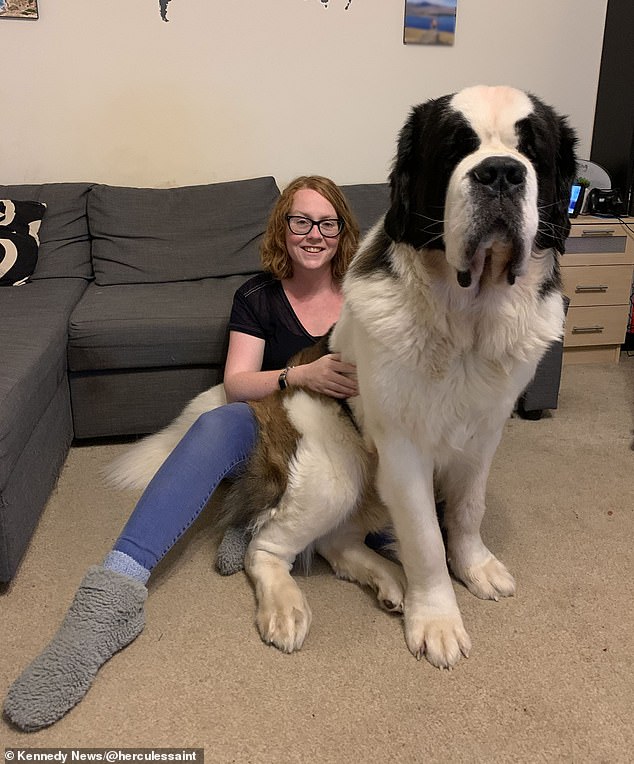
Katie Bridge (pictured), 33, was also unable to afford her gigantic 12-stone dog’s cancer treatment – because his huge size had made the bills so expensive

Liz Hoggard (pictured) was forced to shell out hundreds of pounds on basic necessities for her black and white rescue cat Freddie
The CMA report also found that pet owners pay 16.6% more on average at large vet groups than at independent vets.
With over 60% of veterinary practices in the UK being owned in whole or part by six large veterinary groups, it means that many pet owners across the country are paying higher sums.
Martin Coleman, Chair of the Inquiry Group, said: ‘Pet owners are often left in the dark, not knowing whether their practice is independent or part of a chain or what a fair price looks like.
‘They are sometimes committing to expensive treatment without understanding the price in advance. And they do not always feel confident asking for a prescription or buying medicine online – even when it could save them hundreds of pounds.
‘Even where pet owners could access some of this information, it is difficult for them to compare prices and services – despite the fact that, in most of the country, there are several local practices they could choose between.
‘We are proposing major reforms aimed at bringing about a transformation in the experience of pet owners and empowering them to make the best choices for their circumstances.
‘We believe that our proposals would enable pet owners to choose the right vet, the right treatment, and the right way to purchase medicine – without confusion or unnecessary cost.’
Sue Davies, Which? Head of Consumer Protection Policy, added: ‘Millions of UK households feel that their pets are part of the family, but Which? research has shown that many pet owners have been exposed to bad practices like unclear pricing, potentially excessive or unnecessary charges and no independent route for resolving their complaints.
‘The CMA’s remedy proposals for the veterinary sector underscore the need for greater transparency when a pet owner chooses a vet practice and a treatment.
‘These are welcome proposals and they should be implemented as soon as possible to restore consumer confidence in vet services.
‘It’s clear that the regulation of this market has become outdated, to the detriment of both pet owners and vet practices.
‘The government must act quickly to modernise this sector so that veterinary businesses and the practices they own are regulated and there is an effective independent complaints and redress system.’