This article is taken from the October 2025 issue of The Critic. To get the full magazine why not subscribe? Get five issues for just £25.
Beauty has always been coveted, as the rapture of Helen by Paris of Troy makes plain. From Napoleon’s wagonloads of Italian spoils to the polite wrangling of curators over the Elgin Marbles, art’s fate is entangled with possession. To own beauty, or to contest the right of others to do so, is to wrestle with history and morality.
The issue of ownership is not particularly modern. But recent treatments, shaped by predictable academic fashions, circle around quarrels about theft, justice and desire, suggesting that beauty is no longer absolute but contingent. It is less a truth to be recognised than a claim to be disputed, whose meaning shifts with politics, geography or grievance.
Thus the transcendence once claimed for art in Europe has become flattened into sermons on guilt. It drags into view the drab machinery that most audiences prefer to forget: the lawyers and administrators who now preside where patrons once stood. What had been sanctified by church or crown is today processed like a legal dispute, filed under “heritage management”. As Jacques Barzun dryly observed in The Culture We Deserve (1989), before the art market was absorbed into the modern economy:
nobody was likely to enter protests [over art] … There was no newspaper to assail the decision of the ecclesiastical authorities, no public opinion gathering to petition the mayor. [People’s] contribution towards [art] had gone to the church, not to art directly.
Yet the bureaucratic turn should not overshadow history’s precedents. As Bénédicte Savoy reminds us in Who Owns Beauty?, art and plunder’s entanglement reaches back at least to Cicero’s prosecution of Gaius Verres for his rapacity in Sicily. Verres, painted as the archetypal cultural thief, provides Savoy with a precedent for today’s moral anxieties. From there she moves chiefly to the museum: that secular temple which, as Jean Starobinski observed, emerged with the pantheon in the aftermath of the Revolution, when the collapse of the Church required a new altar for beauty.
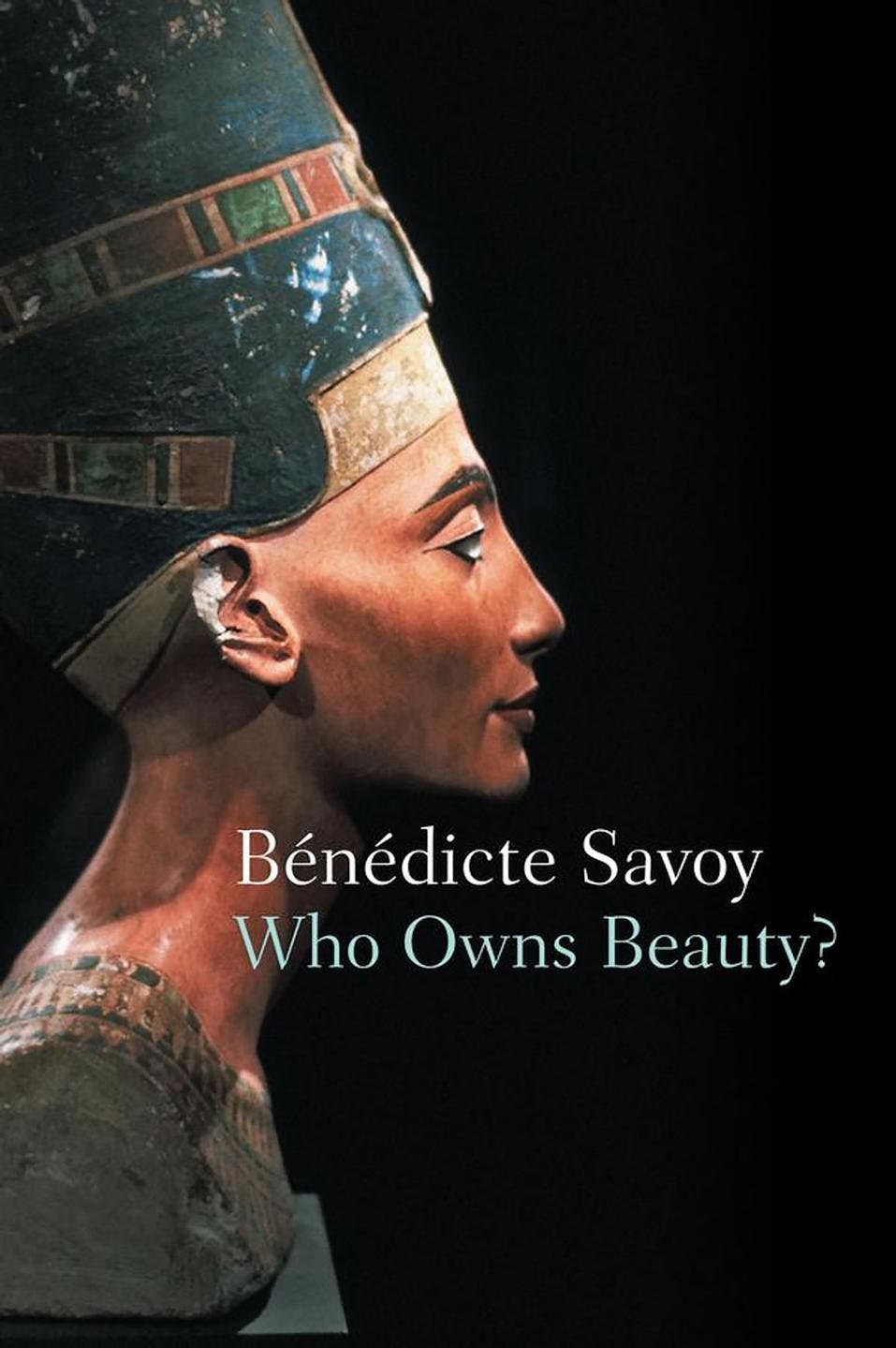
Savoy structures Who Owns Beauty? around a sequence of case studies — from Nefertiti and the Pergamon Altar to Klimt’s Adele Bloch-Bauer and the Benin Bronzes — each tracing the journey of a displaced masterpiece and the disputes it has sparked, with a detective narrative faintly reminiscent of Carlo Ginzburg’s approach in Clues, Myths, and the Historical Method (1989). Her proposition to read this issue through the concepts of “translocation” and “mutation” of heritage is fertile.
Borrowed from genetics, the terms capture how displacement both inflicts trauma and generates new forms, altering not only the works and the societies that house or lose them. In this she stands in the Franco-German Kulturtransfer school of the 1980s, which examined how cultural forms cross borders and acquire new meanings.
But where “cultural transfer” stressed exchange and reciprocity, Savoy insists on asymmetry, injury and imbalance, a framing that narrows interpretation. For all its narrative intrigue, the book oscillates between moments of genuine insight and a tendency to collapse her material into the unexamined assumptions of a progressive moral framework. Power struggles sometimes dominate the analysis, as if every object must testify to the familiar script of dispossession and redress.

From “who owns beauty?” the quarrel slides into “who creates it?” Here Leslie Primo enters the stage with The Foreign Invention of British Art. His book, organised painter by painter from the 16th to the late 18th century, tackles a familiar paradox: Britain did not attain its cultural prominence through purely insular genius, yet British art is nonetheless recognised as a tradition in its own right.
It is a potentially fruitful angle, but it derails early. Primo gives scant attention to class and geopolitics. Thus in the chapter on Holbein the central role of the Church in art patronage is barely acknowledged, though essential for understanding artistic training and the movement of intellectuals across Europe.
More troubling is his terminology. Primo insists on shoehorning early-modern artists into the language of our own day: they become “immigrants”, their social groups “expat communities”, their achievements evidence of “diversity”. Such anachronisms flatten history into sociology, as if the only point were to draw “striking parallels with our contemporary lives”.
Ultimately, the book becomes hollowed-out art history, pressing stray biographical details into service as proof of a thesis. Primo frets that Isaac Oliver’s French birth has been insufficiently emphasised, as if birthplace outweighed religion or training; he insists that Gheeraerts the Younger, who spent nearly all his life in England, could never quite be English because he “did not forget his heritage”.
These rhetorical tics reduce serious figures to tokens of migration and make cultural affiliation a game of bloodlines. Meanwhile, technique and context are scarcely treated, chronology is muddled, sources meagre. The polemical point is clear: to deny, or at least cast doubt upon, the possibility of an English art at all. Incoherently, Britain is cast as culturally impotent, and simultaneously so threatening that foreign arrivals must be seen as locked in “conflict” with native craftsmen.
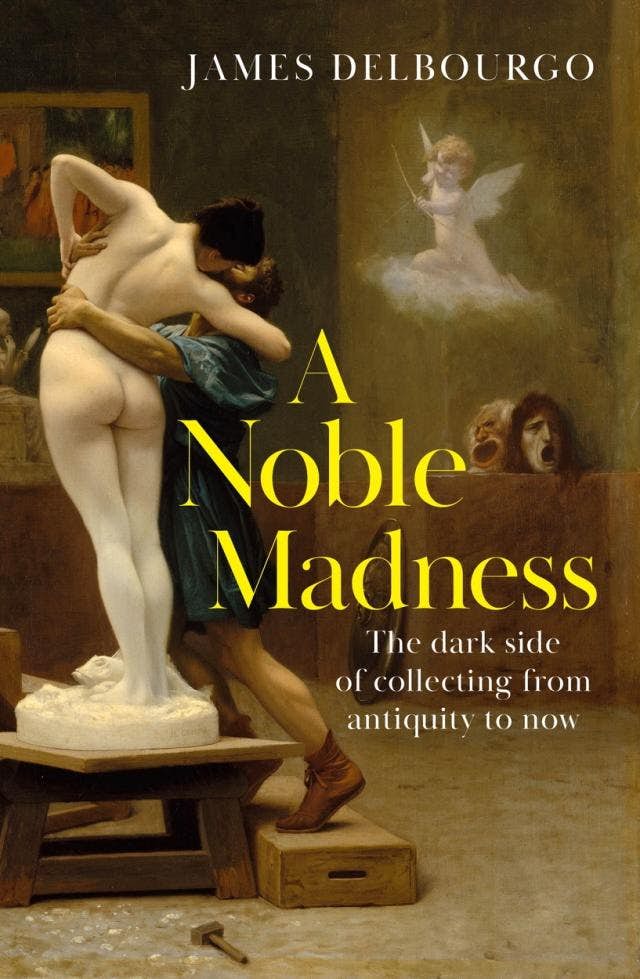
If the intersection of art and ownership so often drains art history of its substance, James Delbourgo shows the reverse: that it is possible to write about ownership, possession and value with erudition and beauty. A Noble Madness revisits the figure of Cicero’s Verres, but not as the emblem of corruption familiar from modern retellings. It places him in his own time’s moral framework: not as a capitalist villain but as a man believed to be possessed, a “psychological masterpiece” in which art, madness and desire are inseparable.
From here unfolds a luminous study of the collector, showing copying and collecting not as distortions but natural expressions of cultural reverence.
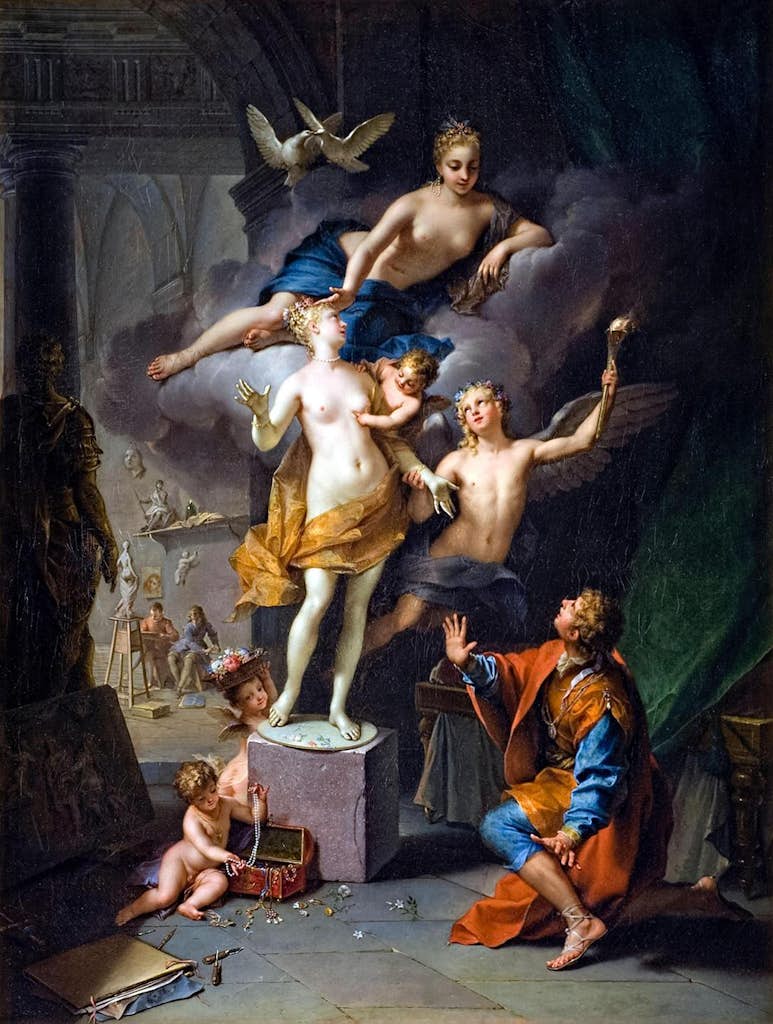
His rich gallery of examples, spanning Ovid’s Pygmalion, Constantine’s re-use of pagan statues, the Ming dynasty’s ambivalent embrace of luxury, 19th century literature, surrealism and the unsettling bird-collector of Hitchcock’s Psycho, form a meditation on the line between homage and obsession. Delbourgo approaches the grey zones of possession with delicacy, allowing myth, history and literature to illuminate one another.
Although all three books adopt case studies as scaffolding, Delbourgo’s is by far the most humane, reminding us why we care, or should care, about art. Through his writing, we see that beauty isn’t merely to be owned, but is something to be loved and passed on. The possessor is not just the collector or curator, but the one who transmits its force: the writer who evokes, the reader who receives, the spectator who participates.
If we pause the quarrel over “who owns beauty?”, these three books prompt the question “who owns art history?”. That our own age often reduces this drama to the language of “restitution” and “stakeholders” is perhaps its most telling impoverishment. Too many are so consumed by their lust to impose their moralism on others that they lose their own humanity. All the while, beauty endures with those who keep it in motion.