For the best part of two centuries, Britons have been flocking to the genteel seaside town of Bournemouth.
Such was its place in the national affections that the resort, with its balmy weather and elegant Edwardian architecture, became known as the retirement capital of Britain, perfect for the twilight years of the nicely spoken.
Fast forward to 2025, however, and the town is in the throes of a story with a very different accent.
These days Bournemouth is acquiring a rather unexpected and much less enviable reputation – for antisocial behaviour and even criminality.
While police insist they are making headway in their efforts to bring down the crime rate in the town, recent days have seen concerns over ‘zombie’ drug addicts prowling the streets, teenage gangs on the rampage and disturbing outbreaks of violence. The fresh salt air is mixed with cannabis, synthetic ‘spice’ and the acrid smell of simmering tension.
If it’s impossible to point the finger of blame in any one direction, attention has been drawn to the presence of three asylum hotels in the town and the unwanted reputation they are gathering.
New data show that more than 100 criminal charges have been brought against residents of these hotels, the Britannia and the Roundhouse and, further along the coast in Boscombe, the Chine Hotel.
Between them they have more than 300 rooms available to migrants.
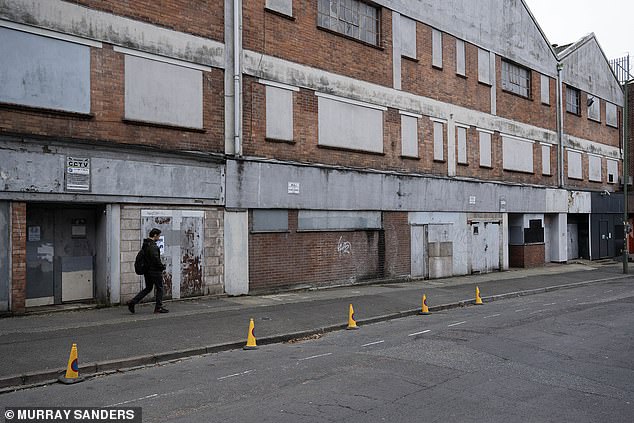
These days Bournemouth is acquiring a rather unexpected and very much less enviable reputation – for antisocial behaviour and even criminality
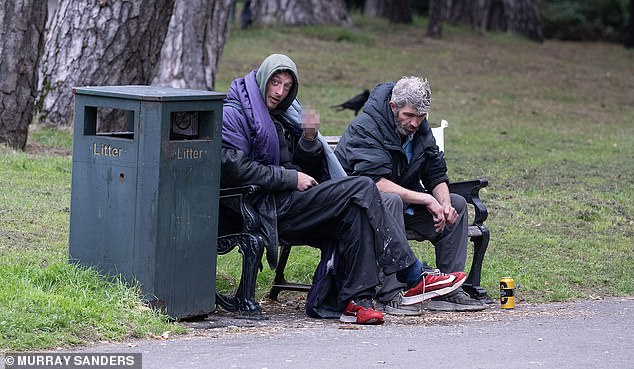
While police insist they are making headway in their efforts to bring down the crime rate in the town, recent days have seen concerns over ‘zombie’ drug addicts prowling the streets
A troubling 91 charges were levelled at people staying in the Britannia and the Roundhouse nearby while a further 25 were brought against residents of the Chine. The combined rap sheet adds up to 116 charges against 51 asylum seekers.
Just in the past few days, three Britannia residents were before the courts on unconnected charges.
One of them, Halil Dal, admitted assault causing actual bodily harm after stabbing another man with a broken bottle outside the Camel nightclub in Bournemouth last December.
Footage from CCTV recordings showed the 30-year-old taking the bottle from his pocket, smashing it against a wall and then making a ‘stabbing motion’ with it several times. A court hearing was told that his victim was lucky to have escaped ‘catastrophic’ injuries.
Dal, who has been staying at the Britannia since fleeing his native Turkey, was given a 24-week suspended sentence.
The court heard that he had faced accusations in his home country of involvement in terrorism.
Elsewhere, Kurdish national Hana Hassan, 22, was jailed for seven years after Winchester Crown Court heard he was part of a 12-man mob armed with machetes who carried out a ‘ferocious and frighteningly violent attack’.
The hearing was told that the January 2024 attack on shopkeeper Kurwan Ali, also a Kurd, came two days after a row at Bar So nightclub, just 200 metres from Bournemouth Pier. One of Mr Ali’s friends, Sepan Qasim, was stabbed twice during the onslaught and suffered a collapsed lung.
In the third case, Shkar Jamal – who previously admitted to threatening a man with a snooker cue outside the hotel – was nowhere to be seen when he was called to be sentenced at Poole magistrates’ court. Fifteen minutes later, he was spotted on the street tucking into fish and chips.
The 24-year-old returned to the court, but a backlog of cases meant there was no longer room for him in the day’s schedule. He was freed on bail and is now due to be sentenced at the end of this month.
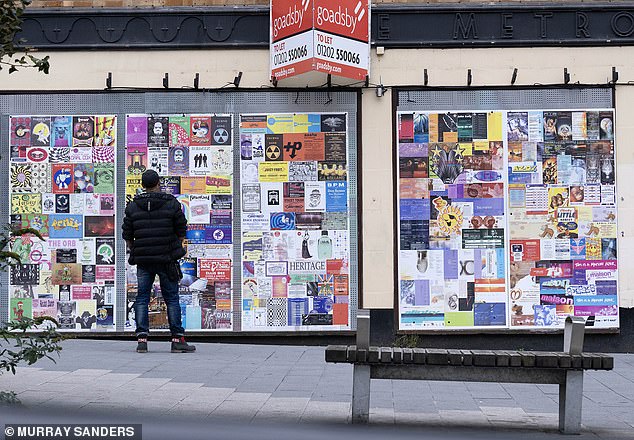
Just in the past few days, three Britannia residents were before the courts on unconnected charges
Nor, unfortunately, is that the end of it. Other crimes linked to migrants include the alleged rape of a 20-year-old woman in a public toilet on Bournemouth beach. Syrian asylum seeker Mohammed Abdullah, who lives in west London, denies rape and sexual assault.
This shocking spate of crimes comes after census data revealed that the population of Bournemouth born outside Britain rose by a staggering 47 per cent between 2011 and 2021. As of last June, there were 615 asylum seekers housed in hotels in the town.
By comparison, Southampton had 103, there were 96 in Portsmouth and none in Plymouth.
Against that backdrop, it is hardly surprising that Bournemouth’s asylum hotels have been targeted in protests by concerned locals.
Earlier this year, the Britannia was surrounded by people holding signs emblazoned with slogans such as ‘Stop the boats’ and ‘Illegal criminals out’. The Chine Hotel was targeted last July.
Similar scenes have, of course, played out at locations across Britain in recent months as worry has turned into alarm.
The most high-profile protests have been at The Bell Hotel in Epping, Essex – where Ethiopian asylum seeker Hadush Gerberslasie Kebatu was accused of sexually assaulting a 14-year-old girl eight days after arriving in the UK. Kebatu, 38, who had been staying at the hotel, was jailed for 12 months.
While serious criminal behaviour is the main concern, Bournemouth has also been hit with a tide of anti-social behaviour. Council chiefs have implemented a series of Public Space Protection Orders as a result.
Notices were put up along the coastline warning individuals not to ‘defecate anywhere other than public toilets’.
One long-time local resident remarked to the Daily Mail: ‘The fact that they even had to put those signs up shows the level this has descended to – talk about adding insult to injury.’
It is all a far cry from the glory days of Bournemouth and its expanse of pristine beaches.
With the arrival of rail travel from the 1870s onwards, the town became a magnet for day-trippers and holidaymakers, especially from London and the Midlands.
Even the rise of affordable continental package holidays in the past 50 years failed to make a significant dent in Bournemouth’s popularity – despite its unashamedly old-fashioned associations with retired Army majors.
It has also been a favourite destination for political party conferences, especially for the Conservatives, down the decades.
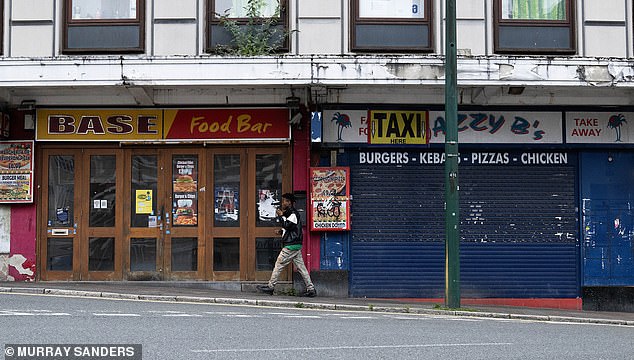
Plagued by crime, drug use and gangs of balaclava-wearing youths, it is hard to imagine Bournemouth being the choice of the political elite these days
It was at Bournemouth that Margaret Thatcher famously danced onstage with the Beverley Sisters during her last conference outing as Prime Minister and party leader in 1990.
Nine years later, Tony Blair presided over what was said to be the largest political gathering in Europe when 20,000 accredited visitors descended on the town for the ‘New Labour’ party conference.
Plagued by crime, drug use and gangs of balaclava-wearing youths, it is hard to imagine Bournemouth being the choice of the political elite these days.
It is in that context that Safeguard Force, a volunteer security company that runs nightly patrols to tackle anti-social behaviour, drug-dealing and violence, was formed by a group of 60 local residents in August last year.
Co-founder Luke Adams, 37, says his initial concerns stemmed from fears about his wife’s safety when she went into the town centre – especially at night.
The father of four, who works in social media management, insists there is an ‘eerie’ atmosphere in the centre after dark, saying: ‘It’s dead in what used to be an area packed with shops, bars and clubs.
‘I know that would sometimes bring its own problems, but at least you didn’t feel alone and vulnerable. There would be police about and security on all the doors who helped out if things took a turn for the worst.’
Mr Adams explains that he and fellow organisers ‘put out a tentative appeal on social media to gauge interest in doing this and it just exploded.
‘This is an apolitical organisation. It is not about tackling any one group, but making sure everyone feels secure whether that is local residents, groups of youths or asylum seekers. We treat everyone the same, with respect.
‘We have broken up four or five serious assaults and it deters drug dealing. Our one main aim is to stop crime and anti-social behaviour and make Bournemouth great again. Is that so bad?’
Not that everyone is deterred by the apparent downturn in Bournemouth’s fortunes. The hoteliers in particular – and understandably – are determinedly upbeat.
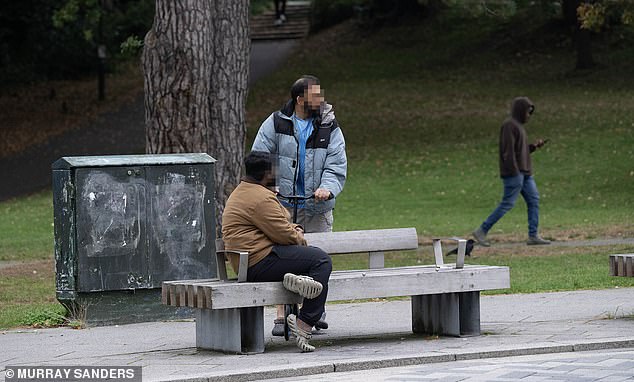
Against that backdrop, it is hardly surprising that Bournemouth’s asylum hotels have been targeted in protests by concerned locals
Figures from research firm Visitor Insights indicate that 10.2 million trips were made into the town centre during the summer months.
The data also suggest that the number of visitors returning at least once a month (36 per cent) and at least once a week (13 per cent) has more than doubled year on year.
Hotel owner Rosie Radwell, who is head of the Bournemouth Area Hospitality Association, says: ‘I am furious at the way my town has been portrayed. It is not the Wild West. We have been done a real disservice.’
Councillor Millie Earl, leader of Bournemouth, Christchurch and Poole Council, insists: ‘It is wrong to present a general perception of Bournemouth based on the behaviour of an extreme minority of people.
‘Let’s be clear about the facts: crime is down, anti-social behaviour is down, rough sleeping is down, businesses are backing Bournemouth with increased investment, and visitors keep coming back to experience the best of what we have to offer.’
They can take heart from Dorset’s Assistant Chief Constable Mark Callaghan, who told the Daily Mail that crime in the county as a whole is down by 1.8 per cent in the past year, with ‘victim-based crime’ reducing by 2.5 per cent. Crime has fallen in Bournemouth town centre since 2023.
All police stations remain open for ‘operational work’ by frontline officers, staff and volunteers, he said. However, changes had been made to the way they work: ‘In recent weeks we have transferred front counter services to Bournemouth, Weymouth and Blandford, and launched new Mobile Police Stations.
‘These changes follow a review, which recognised the public prefer to contact us online and in the heart of neighbourhoods at Community Contact Points and Mobile Police Stations. These allow our people to be more visible in our communities rather than behind a desk.’
It might seem a sign of the tensions in the town that Mr Callaghan also voiced ‘serious concerns’ about the ‘vetting, training, governance and transparency’ of Safeguard Force, the residents’ security group.
He said he ‘would encourage members of the public to speak to our officers and report incidents and crimes directly to us so we’re able to effectively respond and investigate’.
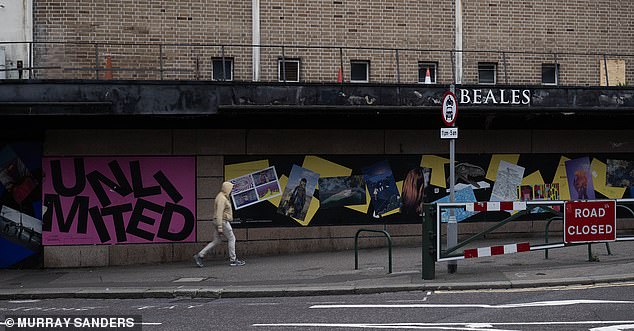
Figures from research firm Visitor Insights indicate that 10.2 million trips were made into the town centre during the summer months
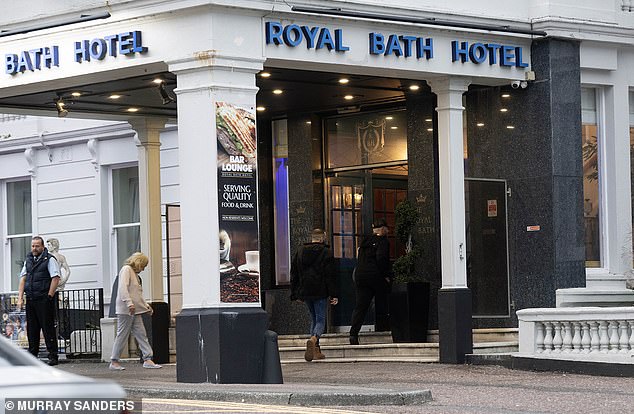
The data also suggest that the number of visitors returning at least once a month (36 per cent) and at least once a week (13 per cent) has more than doubled year on year
Wandering the out-of-season streets last week, it was clear that Bournemouth has seen better days. Aside from the occasional police car speeding by with blue lights flashing and sirens blaring, the place was deserted.
According to retired police chief inspector Chris Amey, who used to be in charge of the areas where the three asylum hotels are located, the town has been simply starved of investment
‘There is no money,’ he tells the Daily Mail, pointing out that the local council debt has risen by £80million to a vast £371million – a sum now greater than the £356million the authority spends on public services for the area’s 400,000 residents.
‘For years Dorset police has been reducing the number of officers who are covering bigger and bigger patches,’ continues Mr Amey.
‘And they wonder why there’s more crime and anti-social behaviour.
‘In 2014 we did a lot of regeneration work in Boscombe [a Bournemouth suburb].
‘We put a police box in the middle of Boscombe and it was manned from 10am to 1am. It had a deterrent effect and there was someone on hand to respond quickly.
‘We targeted drug dealing and prostitution and were very successful. But the wiser higher-ups decided they didn’t like an aggressive, zero-tolerance style of policing.’
No wonder Bournemouth residents have taken action with Safeguard Force, he says.
‘There was a crying need for someone to be doing what the police should be doing.
‘It’s about your priorities. If you want to send out a message that you are going to get stuck into the bad guys you need to back up the words with actions.
‘Dorset Police don’t seem to want to do that. It’s embarrassing.
‘I have two children aged 19 and 20. I tell them as a father and as a copper not to go into the town centre if they can help it.
‘It is not the place it used to be and it’s not safe any more.’