A rare alien-looking fungus that smells of rotting flesh has been discovered by a woman out hiking on Dartmoor.
Known as Octopus Stinkhorn and the Devil’s fingers fungus, it is native to New Zealand and Australia and made its way over to Europe in 1914.
It is particularly eye-catching due to its red ‘tentacles’ splaying out of the ground and has a strong and unpleasant smell, which is an olive-brown goo called ‘gelba’.
Becky Harrison was trekking on Dartmoor near Merrivale with her walking instructor, Martin Williams, when they spotted the freaky tentacles.
The invasive species is believed to have been introduced first to France through military supplies around the beginning of the First World War.
The fungus was first spotted in Britain in Cornwall in 1946 before it spread to Bedfordshire, Hampshire, Kent, Suffolk, Surrey and the Channel Islands.
The olive-brown goo called ‘gelba’ is used to attract insects to the spores on the arms of the Devil’s fingers, which are then spread by visiting insects.
‘It’s incredibly rare to find,’ Ms Harrison said.

Known as Octopus Stinkhorn and the Devil’s fingers fungus, it is native to New Zealand and Australia and made its way over to Europe in 1914
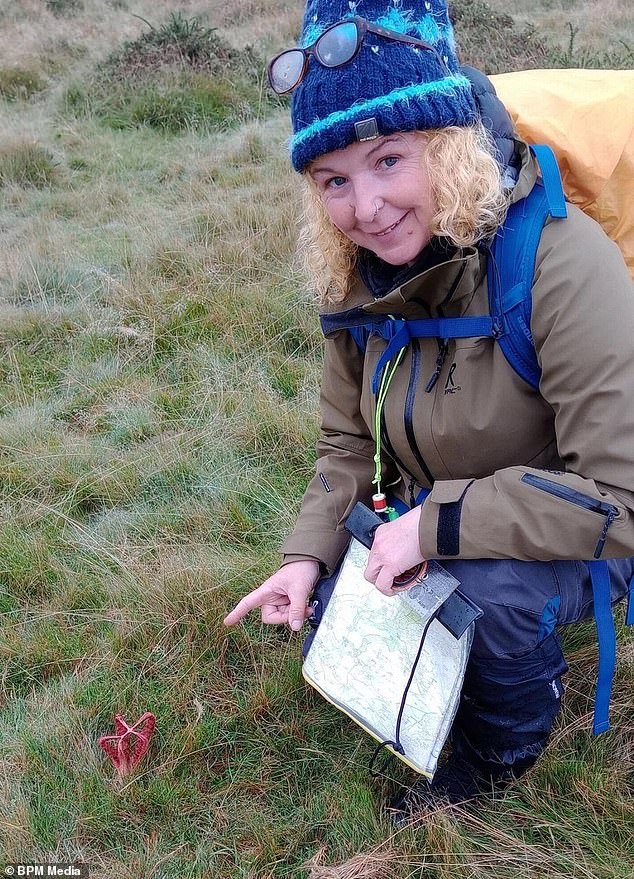
Becky Harrison was trekking on Dartmoor near Merrivale with her walking instructor, Martin Williams, when they spotted the freaky tentacles
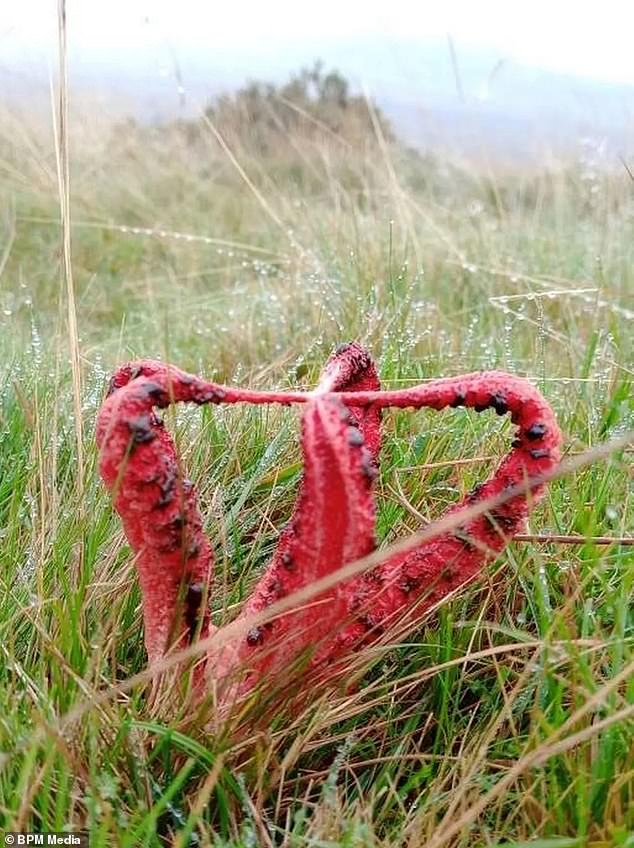
It is particularly eye-catching due to its red ‘tentacles’ splaying out of the ground and has a strong and unpleasant smell of rotting flesh, which is an olive-brown goo called ‘gelba’
‘When we found it we couldn’t smell it, I think it’s in its early stages the long tentacles were stuck together too and I think it’s supposed to spread out more and that’s when it gets its bad stench.’
Ms Harrison described the discovery as a ‘wow’ moment, even if she thought it was going to be larger in size.
‘It was about the size of my hand really, I thought they were way bigger,’ she said.
‘It was definitely “wow”, it was incredible.’
The fungus, officially known as Clathrus archeri, is scarce but can be found in the UK between the summer and autumn months in woodland, towns and in gardens.
The creepy-looking growth is formed when four to seven tentacles erupt from a suberumpent egg, and slowly grow as the fungus matures.
Initially, the tentacles are white before opening up and developing their adult colour of pinkish-red.
According to pet nutritionist Emily Boardman at Burns Pet Nutrition not all fungi are poisonous to dogs, but some are.
She advised that canines should avoid them as it can be hard to distinguish one from another.