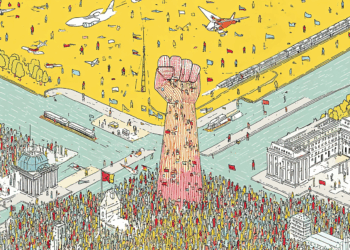
After news broke on Wednesday of a ceasefire deal between Hamas and Israel, it seemed as though the people in Gaza were rejoicing more than the Israelis. One reason, of course, was a feeling of greater relief among Gaza’s 2 million residents after a devastating war on their land. Yet another reason might be this: The 20-point plan locks in steps toward Palestinian self-governance even if Hamas does not support the next phases.
Peace and prosperity, in other words, are not the plan’s only purposes.
One point allows a proposed interim administration over Gaza – led by President Donald Trump – to take shape with Palestinian participation, backed up by an Arab-led force. Foreign aid would flow toward rebuilding Gaza without Hamas, which currently controls only portions of the land.
The plan’s ultimate aim is to create a “credible pathway to Palestinian self-determination and statehood.” During the war, public opinion in Gaza toward Hamas has generally gone down, with Palestinians largely rejecting the group’s call for the destruction of Israel in favor of a two-state solution.”
“We, the civilians, are the ones who’ve suffered – truly suffered,” one man in Gaza told the BBC.
“The factions [like Hamas] don’t feel our pain. Those leaders sitting comfortably abroad have no sense of the suffering we’re enduring here in Gaza.”
The war might have strengthened the people’s aspirations to have their voices heard. “Beyond the war’s direct effects, it is important to emphasize the deep crisis of trust existing between Palestinian citizens and their political system,” wrote analyst Omar Shaban earlier this year for the Arab Reform Initiative. “This crisis shapes Palestinians’ vision and perceptions of Gaza’s future.”
While Israel will have its own postwar politics to work out, the more critical process lies with the people in Gaza using the plan to fulfill their desire for self-governance. Hamas misread those aspirations. The plan, with its broad international support, did not.