WITH winter fast approaching, you may be wondering how best to keep condensation and mould at bay in your household.
Choosing the right temperature may play an important role in ensuring your house stays condensation and mould free.
1
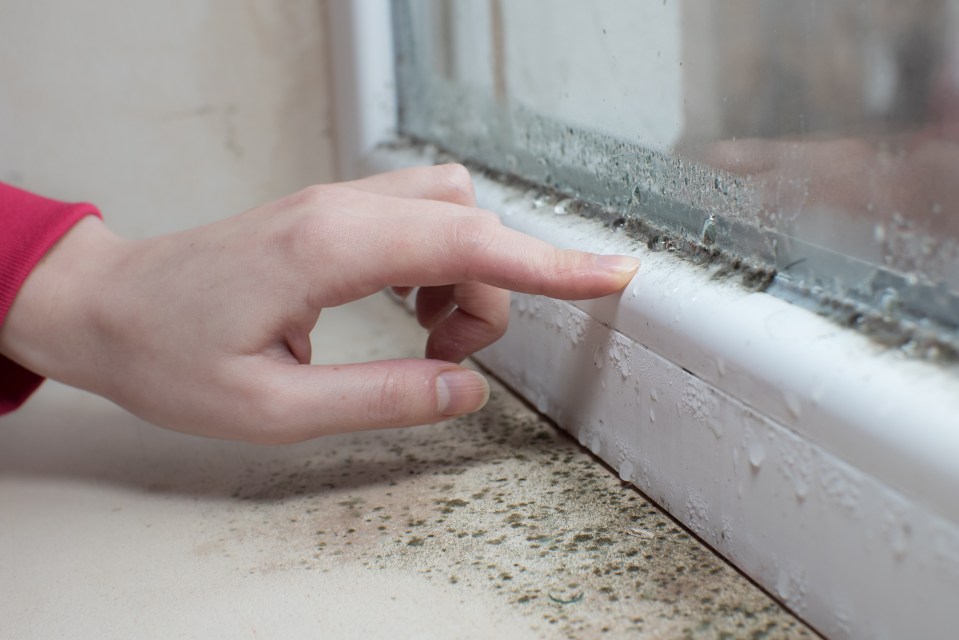
Mould will spread if not treated and it can cause health problems including respiratory issues, allergies and asthma.
Ben Gallizzi, energy expert at Uswitch.com, explains: “Keeping your home warm can help prevent mould from building up during the coldest months of the year.
“The Energy Saving Trust recommends that people in good health heat their home to between 18 and 21 degrees celsius.”
Meanwhile, you should avoid letting the temperature drop below 15-16 degrees as condensation can start to form.
Mark Batchelor, director of property services from housing association Hyde, adds: “Condensation will form on the coldest surfaces in your home, these cold areas are usually around windows, the corners of the room, and external walls.
“The warmer the air temperature is in your home, the more moisture it can hold.”
Tips to keep condensation in check
Moisture can cause mould, so keeping condensation in check is key to a mould-free home.
Opening windows and airing your house regularly can help.
You can also keep bathroom and kitchen doors closed when using these rooms to avoid moisture spreading throughout the house.
If you want to minimise the amount of moisture in your home, Hyde says you should:
- Dry clothes outside where possible, or in a room (preferably the bathroom) with a window open, or extractor fan running, and doors closed. Only use a tumble dryer if it is venting outside, or has a condenser
- Never put wet clothes on a radiator – they fill the room with moisture in seconds
- Keep lids on saucepans when cooking and ventilate the room and keep your extractor fan on
- Always run the extractor fan or open a window when showering or cooking, and wipe away any excess water on floors, tiling and worktops
- Trickle vents must remain open
- Run cold water in the bath before adding hot.
Hyde has also shared top tips to improve air movement around areas prone to mould. These include:
- Pull all furniture away from walls, including beds
- Leave a gap between the curtains and the wall during the day
- Keep air bricks and vents open and clear
- Don’t add a seal to kitchen and bathroom windows or to windows in rooms that are prone to damp
- Don’t over-fill cupboards and shelves
- If possible, open windows to increase ventilation and air your home regularly
- Don’t overfill your rooms with possessions, furniture and belongings.
If you need some extra help, an interior dehumidifier can suck condensation from windows and absorb moisture in your house.
Some have also taken to social media to praise a more unconventional method to stop your windows getting soaking wet with condensation – using a 95p buy from Aldi.
How to get rid of mould
If mould has already appeared in your household, there are ways to get rid of it.
You could try mixing one part bleach with four parts water and applying the solution to the mouldy area with a brush or a cloth.
Scrub gently until the mould is gone, then wipe away the bleach and dry the area.
You may also want to mix equal parts of white vinegar and water in a bottle and spray the mouldy area.
Vinegar is known to be a natural mould killer that can help loosen mould from fabric.
There are also plenty of mould cleaners available in supermarkets.
We have previously reviewed some supermarket mould cleaners – and one 25p solution was better than Cillit Bang.
An expert’s guide to removing mould and repainting walls
Not only does mould look ugly, but if it’s not treated properly it can impact your health.
Ronseal shared its guide to removing, fixing and preventing mould infestations.
You should only remove mould if it’s caused by condensation and covers an area smaller than one metre squared. If the mould is caused by sewage or contaminated water, call in a professional.
Before you start, wear goggles, long rubber gloves and a mask that covers your nose and mouth to protect you from the mould spores. Open the windows for added ventilation but keep the doors shut to avoid spores spreading.
How to remove mould from walls:
- Fill a bucket with water and mild detergent like washing up liquid. Or use a dedicated mould remover to make quick work of it.
- Dip a cloth in water and wipe the mould off the wall. Don’t brush it as this can release mould spores.
- Once you’ve removed the mould, use a dry rag to remove the rest of the moisture.
- Throw away the cloth and vacuum the room to make sure you’ve removed all of the spores.
How to paint over mould:
Never ever paint over mould without killing it first. It won’t tackle the source of the problem and will make it look worse.
Once you’ve treated the affected area, use a specialist anti-mould paint to finish the job.
Damp stains can be painted over with a suitable paint like Ronseal’s 6 Year Anti Mould Paint, so long as the damp has dried and the source has been treated. Some damp sealants can be applied directly onto a wet surface, so check the instructions before you begin.