Grand Designs viewers have accused the programme of ‘shocking eco washing’ after the latest episode showed a couple’s mission to build their dream ‘eco home’.
Host Kevin McCloud took Channel 4 viewers to West Sussex, where Pete and Aey were seeking to demolish their ‘jaded’ pre-existing bungalow for a factory-made, ‘sustainable’ property.
To achieve their ‘low carbon’ design, the home was constructed without the use of robots from locally sourced Douglas fir trees, and fitted with recycled newspaper cellular insulation in a factory in Wales.
It was then transported more than 200 miles using five huge lorries and cranes to lift it into place in their Sussex plot.
Despite a relatively smooth build thanks to the factory-build design – a rare feat for the show – Pete and Aey ended up spending almost £1.5million on their new home.
They had paid £650,000 outright for the plot and, by the end of the episode, admitted their £750,000 budget had stretched to more than £800,000 in expenses, which included installing a £42,000 modern kitchen.
Meanwhile, viewers were left unconvinced by their home’s eco-credentials, especially as it came as a result of demolishing the pre-existing bungalow, even accusing the programme of ‘ecowashing’.
Eco-washing, also known as greenwashing, refers to practices that are deemed to be ‘misleading’ in how environmentally friendly or sustainable they actually are.
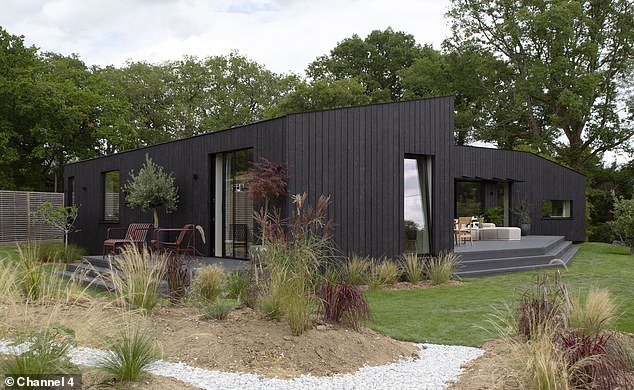
Pete and Aey built a sustainable ‘super eco’ home in West Sussex (pictured) – but viewers questioned how environmentally friendly it actually was
One person said: ‘Shocking eco-washing in tonight’s ep. Surprised Kev and team don’t call this out.’
They added: ‘The demolishing an existing house to build an eco house mind f***. Again.’
Another asked: ‘No solar panels?’, while one more called it ‘a black edifice that has no relationship with the surrounding countryside’.
Pete and Aey had opted to create a ‘rewilding’ zone around their property to encourage wildlife.
But a third pointed out: ‘Eco house yet the ludicrous large driveway is a barren ecological dead zone. What happened to front gardens?’
Others said: ‘That’s just a massive wooden structure! Not my cup of tea!’;
‘£1.5million for a prefab that still looked like a prefab. No thanks.’
Others criticised the flat roof design and black wooden cladding, calling it ‘very boring’ and ‘unrelentingly black’.







Viewers were left unconvinced by their home’s eco-credentials, especially as it came as a result of demolishing the pre-existing bungalow, even accusing the programme of ‘ecowashing’
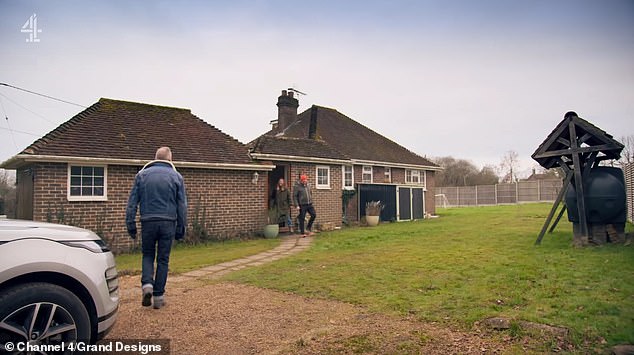
The couple had demolished the existing bungalow on the site (pictured) to make way for the new property
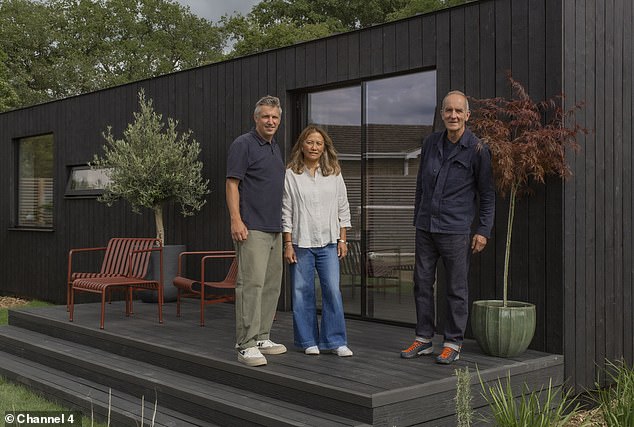
Kevin joined Pete and Aey, who were building a home in a factory in Wales, to be transported to West Sussex
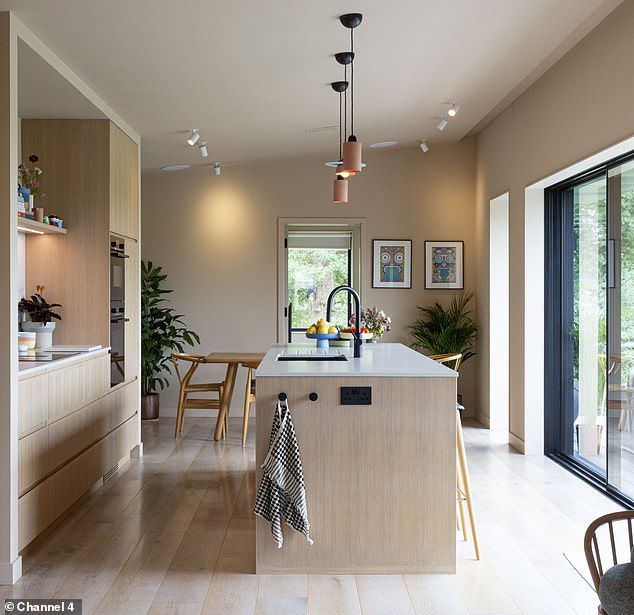
The final kitchen was light and bright, with Kevin saying it felt like ‘being surrounded by nature’
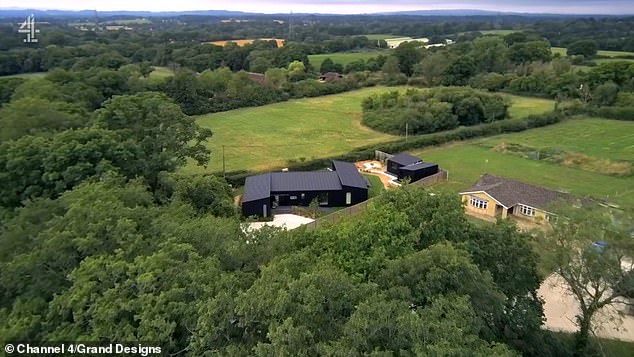
The zig zag design was nestled in the middle of the British countryside
However, Kevin, Pete and Aey were all blown away by the finished property, which had taken just six months from design to completion with minimal blood, sweat and tears.
‘Wow, my word that is sharp. It is darkly handsome – that is no ordinary bungalow. It doesn’t look preassembled at all,’ gushed Kevin, as he returned to visit the couple in July.
He was impressed by the classic and spacious kitchen space with a huge window looking out onto nature, giving the impression of being surrounded by trees.
‘It’s like you’re in the clearing of a forest,’ commented Pete, and there was no sign of the five ‘modules’ of the building work, with everything seamlessly blurred into one structure.
Pete and Aey had spent £42,000 on the kitchen alone, but with oak fittings it made for a eye-catching central feature of the property.
Elsewhere, they showed off a private bathroom, Pete’s study and a walk-in wardrobe, while their two children Alice and Joseph each had their own space.
Pete, who himself works in manufacturing in London as a president of supply chain strategy, wanted a pre-planned house due to not liking ‘surprises’.
He emphasised that it was important for the house to be ‘sustainable’ with ‘wildlife’ around, but admitted: ‘I’ve never met anyone who’s built a house by this method. In my head, there’s not many manufacturers who do it.’
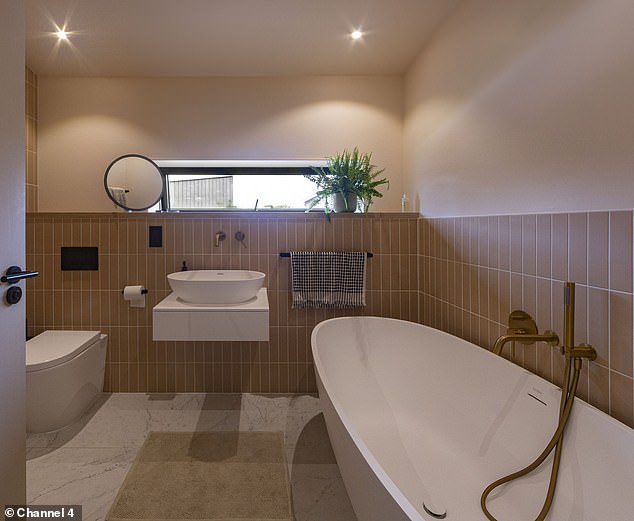
There was also a family bathroom as Kevin took a tour of the property
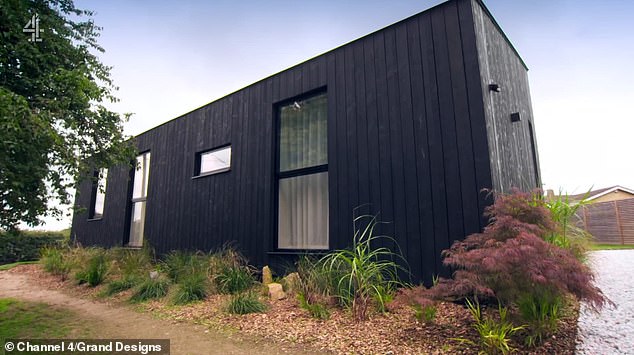
Others criticised the flat roof design and black wooden cladding, calling it ‘very boring’ and ‘unrelentingly black’
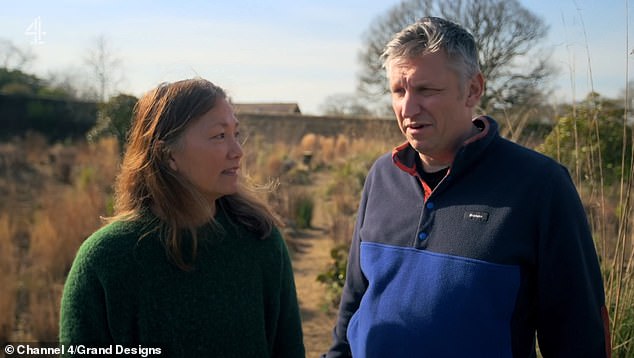
Pete and Aey ended up spending almost £1.5million on their new home
Referring to their ‘super eco’ project, a doubtful Kevin called it a mission of ‘jaw-dropping faith’.
Their zig-zag design featured 68 timber panels from locally sourced Douglas firs, breathable boards and managed ventilation with a re-wilded garden.
With only a three month window until the custom-made house was due to be delivered, the couple certainly had their work cut out for them.
And from the start, they faced numerous issues – the first being needing a ‘bat licence’ from Natural England before they could even start the demolishing the bungalow – let alone starting to prepare the foundations.
Another setback saw building going awry after the architects drew up two different sets of plans, with just a 1.125 metre discrepancy risking the accuracy of the entire building.
They had to race against the clock to install their home – trying to beat dawn breaking, when the school run would begin down their small lane.
Measuring in at four metres wide by 12 metres long and weighing a whopping 20 tons, the block containing their living room was worth £120,000 and was the first to be lifted into place.
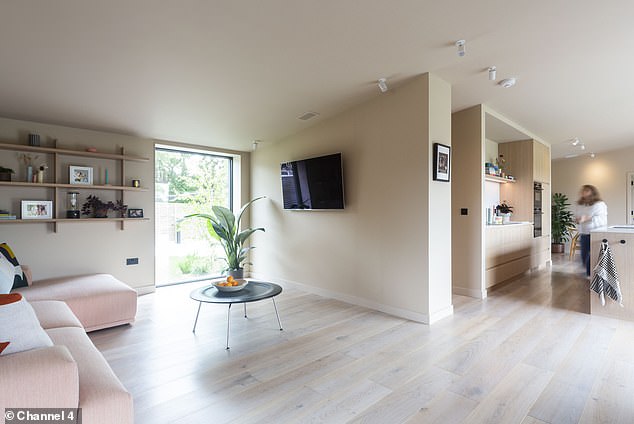
The five modules had been seamlessly blended into one spacious property
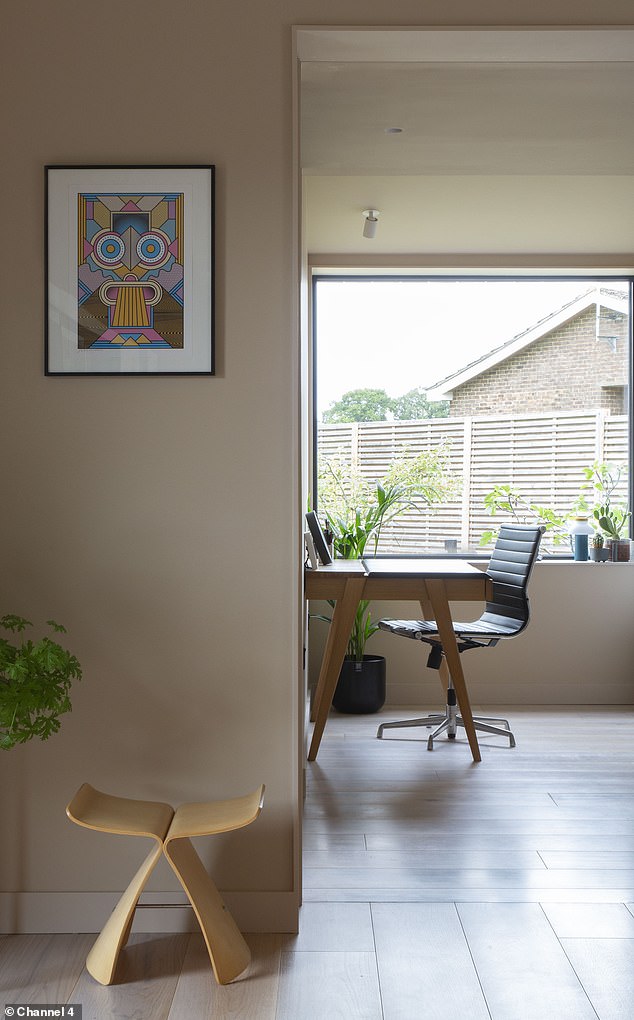
It made for a modern ‘carbon-first home’ with state of the art insulation. Pictured: Pete’s new study
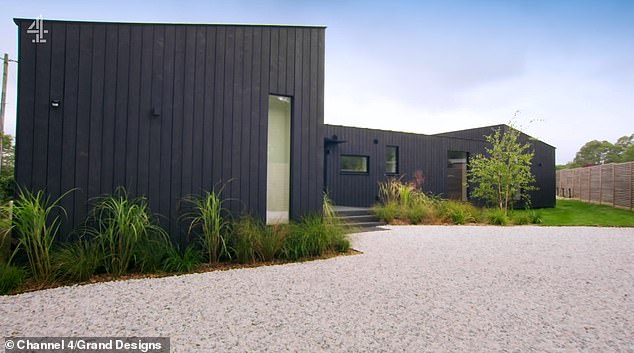
Pete and Aey had opted to create a ‘rewilding’ zone around their property to encourage wildlife
Pete and Aey were forced to watch on helplessly as the room was winched up between overhead cables and trees, all with added time pressure of the school run starting once dawn approached.
They soon winced as the front of the building fell with a loud ‘thud’ onto the front of the lorry, with host Kevin McCloud warning that it looked ‘ever so slightly off kilter’.
Luckily, thanks to its ‘onion design’, with each room consisting of multiple layers, the room was strong enough to withstand damage, and the house was docked and ready for work in less than five hours.
Just five weeks later, Pete, Aey and their two children were able to pick up the keys and move in.
From water towers to lighthouses, dream houses that swallowed fortunes to an eco-home that almost collapsed, Grand Designs has delivered some of the most emotional and gripping real-life stories on television.
For more than a quarter of a century the show has charted ordinary people’s triumphs and disasters, and the new 24th series introduces another couple of firsts – a project built on bereavement and a full-blown fortress being raised on a hilltop that will be visible for miles around.
At the heart of all these dramas stands Kevin McCloud, guiding viewers through the highs and lows experienced by Britain’s most ambitious homebuilders, and one project personifies the show.
‘We’ve got a chap building his own castle,’ said Kevin prior to the new season airing. ‘It’s fulfilling his childhood dream. That’s the stuff that makes Grand Designs what it is.’
The new season of Grand Designs airs on Channel 4, 9pm Wednesdays.