This article is taken from the October 2025 issue of The Critic. To get the full magazine why not subscribe? Get five issues for just £25.
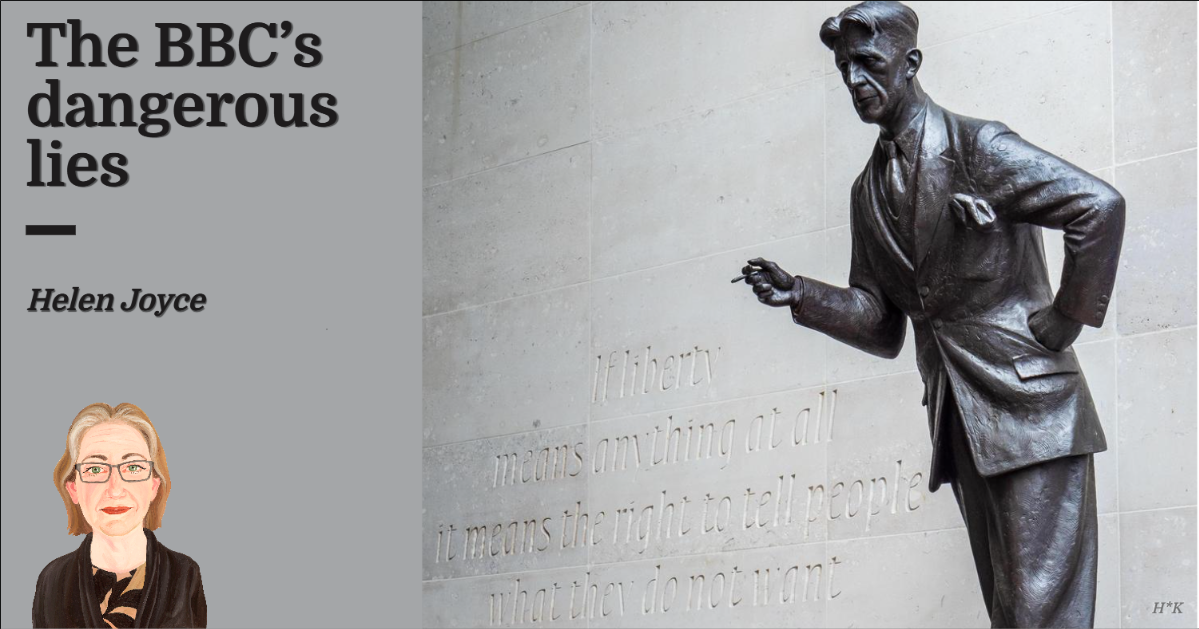
Visit BBC Broadcasting House in central London, and you’ll pass a statue of George Orwell accompanied by a quote from an unpublished preface to Animal Farm: “If liberty means anything at all, it means the right to tell people what they do not want to hear.” When the statue was erected in 2017, the head of BBC history said it would serve as a reminder of “the value of journalism in holding authority to account”.
If only. The statue isn’t a symbol of the BBC’s journalistic excellence, but a standing reproach for its failure. The BBC is statutorily required to remain politically and ideologically impartial whilst fulfilling its mission to “inform, educate and entertain”. Instead it’s a biased and boring purveyor of propaganda. The government should abolish the levy on TV-watchers that sustains it and leave it to sink or swim.
The rationale for a state-funded broadcaster was always shaky. Yes, it means big cultural and sporting events are free to air — but at the cost of paying the TV licence, and when something is popular, large audiences will pay for it voluntarily. And yes, it means stuff like ballet and fine art gets covered too, but they have avid fans who will happily pay for specialist coverage, and why should everyone have to pay for stuff only a few are interested in?
◉ ◉ ◉
Journalism requires a fair bit of muckraking, even at the “quality” outlets. I spent nearly two decades at the Economist, so high-minded that The Simpsons parodied it with a fake but utterly plausible cover about “Indonesia at a crossroads”. Even on beats as dry as geopolitics and international development, the real story is sometimes grubby and often one that the powers-that-be don’t want you to tell.
But willingness to get your hands dirty and indifference to elite opinion are incompatible with sucking up to the great and good who hold your purse-strings — and who dole out gongs and peerages to retiring directors-general.
As for the idea that without a state-funded broadcaster we would lack a non-partisan voice — please. The BBC’s sensitivity to elite opinion means it is as biased as the worst of them, all the while claiming to be neutral.
With no upside for success or downside for failure, the BBC is dull and lumbering rather than nimble and adventurous. Its eyes are fixed on the next licence fee negotiations rather than the next big thing.
The past 30 years have been torrid for commercial legacy outlets. First the internet and search engines; next the financial crisis and after that the rise of social media, user-created content and on-demand streaming lured away their audiences and upended business models reliant on advertising revenues. Insulated by the licence fee, the BBC was spared the carnage.
◉ ◉ ◉
Its boosters look around a denuded media landscape and think that without it, things would be worse. To the contrary, the BBC is partly responsible. It’s the world’s largest publicly funded media organisation; it’s in English, the global language; and its website is free to read. It distorted a market already in turmoil, much as the giants of the dotcom boom did by offering their wares free until established players went to the wall.
By providing regional news on its website, it helped destroy the market for local newspapers. That’s where the route to Fleet Street used to start. By the time someone made it to the nationals, they had worn through a lot of shoe leather and lost any highfalutin’ ideas they had picked up at university — if they had bothered going, that is.
Now almost all journalists must start as unpaid interns or freelancers paid less than half the going per-word rate 30 years ago. They need a super-human ability to hustle or, more often, well-off parents living in London. Many went to private school and Russell Group universities, and what they lack in life experience they make up for in absurd yet fashionable theories.
The worst of which is, of course, that people should be referred to as male or female according to their preference. In Nineteen Eighty-Four Winston must be tortured to make him say that two and two make five; the BBC lies about reality voluntarily.
◉ ◉ ◉
A mustachioed German neo-Nazi taking advantage of the country’s gender self-ID law to serve his sentence in a women’s jail; a mentally ill American teenager who shot up a Catholic church, killing children; a man who livestreamed himself skinning and dismembering a cat before chucking it in a blender, and who strangled a stranger and threw the body in a river?
Literally no man is deranged enough that the BBC balks at his demand to be called a woman and she/her.
If you complain about one of these stories, you’ll be told the BBC’s style guide requires journalists to refer to people as they wish, and in particular that it does so if that is the language used in court. In other words, it has written rules for itself that require it to repeat other people’s lies, especially when those lies are self-interested or originate from state-run sources. Pravda couldn’t have said it better.
Liberal American outlets, notably NPR and the New York Times, also fell for gender woo. So did most UK broadcasters and print media. But if there’s any point to state funding, it should be to render the BBC more resistant to ideological lobbying, not less.
As the trans madness lifts, other outlets are starting to shift, coming up with ad hoc rules such as “don’t use his preferred pronouns if he’s a rapist or murderer”. Not the BBC, where everyone will march in lockstep until an edict goes out from the politburo.
◉ ◉ ◉
It’s not just news that is distorted by the BBC’s determination to pretend men can be women. In recent months University Challenge, Antiques Roadshow, Escape to the Country, The Repair Shop and Match of the Day have all featured trans-identifying men as guests, every time presented as women without any mention that they are trans, let alone that they aren’t actually women at all. For less than 0.1 per cent of the population, that’s a hell of a lot of “representation”.
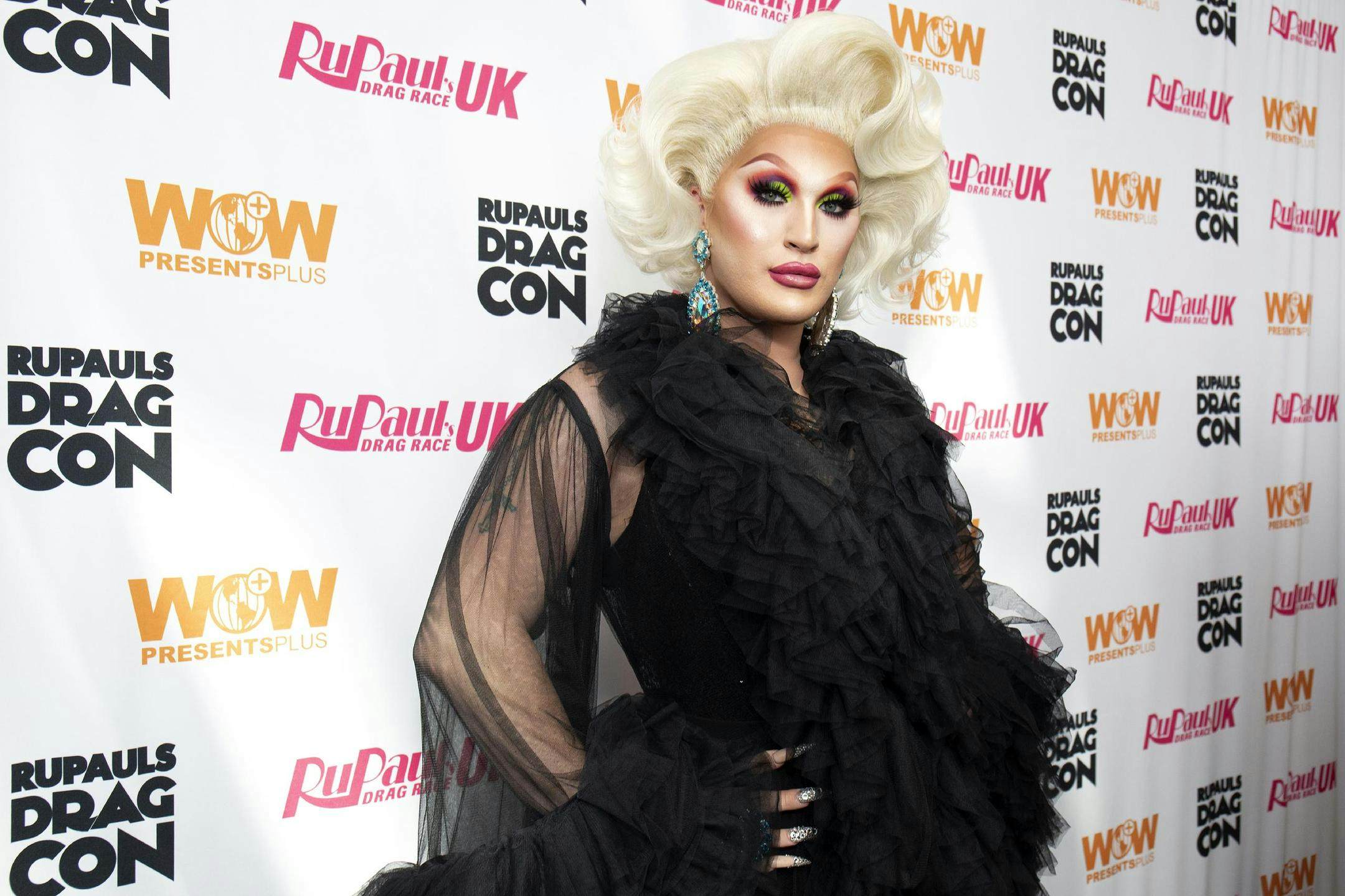
But not as much as the BBC gives to drag queens, its favourite demographic. On a recent day nearly half the first page of results for a search on its website for “drag queen” (a preloaded tag) were about The Vivienne, a queen with they/them pronouns (scrupulously observed) who was addicted to ketamine and died in January of drug abuse.
Every update on the cause of death and every Z-list celebrity who mourned his passing merited an update. Compare that to the single article apiece on the conviction and sentencing of Stephen Ireland, a high-profile LGBT campaigner and founder of Pride in Surrey, for raping a 12-year-old. When it comes to the rainbow, only boosterism is allowed.
◉ ◉ ◉
Presumably the drag queen obsession followed the pricey purchase of Ru Paul’s Drag Race in 2019. Six years later the BBC must surely have asked every drag queen in Britain his opinion about absolutely everything. It’s reminiscent of a Soviet factory pumping out unwanted, outdated tractors because the politburo hasn’t told it to stop.
The ideological product placement is most dangerous on children’s television, since it’s helped fuel a huge increase in trans-identifying youth. The 2013 CBBC series My Life featured Leo, a 12-year-old girl who was one of the first children in the UK to go on puberty blockers. Straight away referrals to the disgraced, since-closed gender identity clinic in London boomed.
When the inevitable public inquiry into the scandal of child gender medicine finally happens — after everyone who could be sacked or jailed is safely dead, retired or in the House of Lords — the BBC will deserve a large part of the blame.
Quite apart from the harms, everyone knows humans can’t change sex, and that the differences between male and female are real and consequential. If a media outlet is determined to keep lying about something so obvious, why trust anything it says?