A half forgotten actor died recently. His name was Ray Brooks and although his name may not be instantly familiar, his voice almost certainly would have been because he was part of a once thriving cast of voice artists whose pitch-perfect pipes graced hundreds of TV and radio ads.
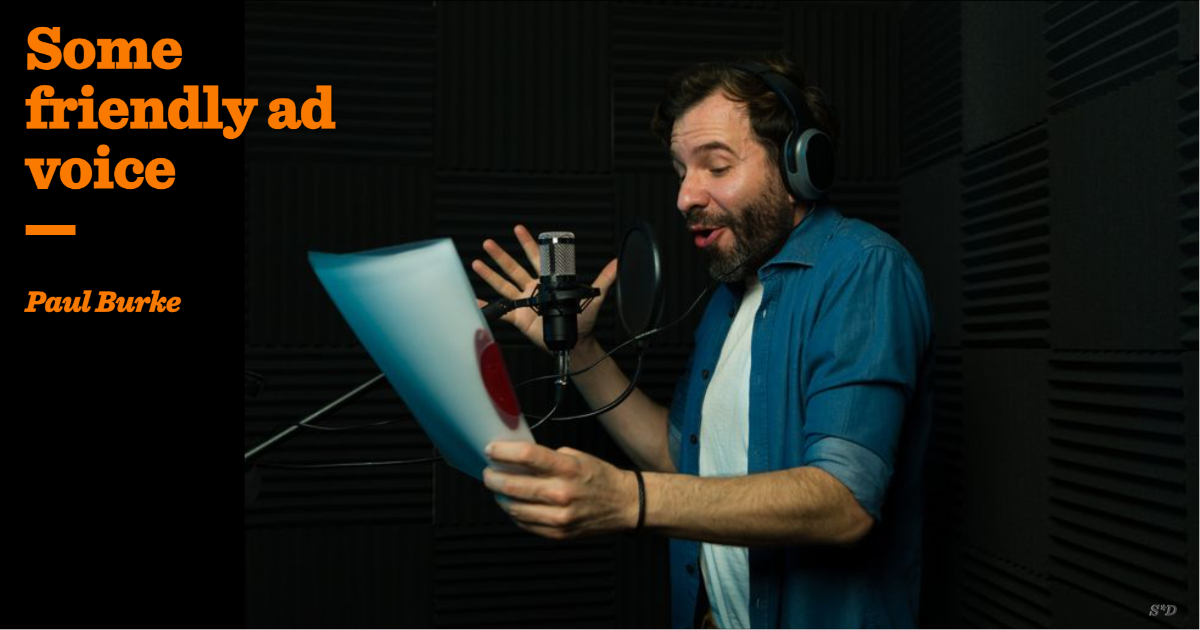
My job is writing and directing radio commercials so I can tell you first-hand that voice acting is a very particular skill. Never assume that someone who’s a great stage or screen actor will also be a great voice actor. Stars of stage and screen often owe that stardom to good looks, charisma or sheer physical presence. When stripped of all this, they’re sometimes less than impressive. What’s required is purely vocal — subtlety of tone, clarity of diction and the ability to read quickly and fluently without ever sounding rushed.
Comedians seldom have this ability either. Their brilliance comes from working with an audience and delivering their own material with the gesticulations and facial expressions that make that material so funny. When the script is written by someone else, isn’t exactly hilarious, needs to sell a product and come in at exactly 30 seconds, it can be no laughing matter.
Fortunately, there were always majestically talented voice actors who’d arrive at Soho sound studios and made my working life a joy. Certain events, however, have conspired to spoil the fun and debase what these people have always done so brilliantly.
It started with a now discredited belief that for a message to be accessible and easily understood, it had to be delivered in either a broad regional accent or an inarticulate “urban” one. This patronising policy has since backfired because this sort of voice was too often incompatible with the product it was trying to sell. Such accents tended to be more alienating than accessible because in the UK, the greatest population density is in the South East. Nobody’s suggesting that accents need to be as polished and immaculate as AN Wilson’s but because of a growing number of listeners whose first language is not English, a neutral South East accent — like Ray Brooks’ — is now recognised as the most accessible and easily understood.
Rob Brydon could play two people talking to each other and you’d never know it was the same person
The next problem was Covid. The studios had to close and so voices had to be recorded via Zoom and this opened the door to some terrible “voice artists”. Anyone with an internet connection, a microphone and a duvet to drape over their heads to provide “soundproofing” thought they could do it and if you listen to any commercial radio station, it’s been horribly apparent that they can’t.
Those very radio stations had seen a chance to make more money and had started making the ads themselves. They weren’t too concerned about excellence as long as the voices were cheap, so the home duvet brigade were happy to undercut skilled professionals with sub-standard and ineffective work. They (literally) phoned it in, reading boring scripts that just laid out bare facts but made no attempt to engage or entertain the listeners.
Though it seems that even this isn’t cheap enough. Some advertisers are now experimenting with AI voices on radio ads in their drive to cut costs to practically zero.
Finally at the other end of the scale is an obsession with celebrity. Shallow clients will often pay top dollar for a “famous voice” on their ad campaign. A major supermarket once asked me to cast “somebody famous” to voice their TV commercials, so I sent them twelve proper household names. However, I labelled them “Voice 1”, “Voice 2” etc because I knew what would happen. Even though these were all famous people with faces you’d recognise immediately, how many of those twelve “famous” voices did they recognise? You’re ahead of me, aren’t you? None.
Advertisers usually only want a celebrity so they can tell everyone they’ve got a celebrity but if you need to tell everyone, what’s the point? They then want to take photos of this person in the recording booth to put out on Instagram. Trouble is, once you go from invisible to visible, you go from “ad” to ”personal endorsement” and the agent can then demand a lot more money. So there really is no point.
Celebrity casting started when Dreamworks let everybody know they‘d cast Eddie Murphy as the voice of the donkey in Shrek. This was counter-productive because once you knew it was Eddie Murphy, you “saw” Eddie Murphy on screen rather than the donkey.
Compare that with Simon Greenall who voices Aleksandr the Meerkat in the comparethemarket campaign. Because Simon’s not so famous — but utterly brilliant — you don’t “see” him, you only see Alexsandr. And that character is the principal reason for the campaign’s enduring success.
Some voice artists come out from behind the microphone and become properly famous. Long before Gavin & Stacey or Would I Lie to You?, we all knew Rob Brydon. Supremely gifted and versatile, he was (still is) so good that if you didn’t have the budget for two voices, Rob could play two people talking to each other and you’d never know it was the same person.
Ditto Hugh Dennis. When I first used him as a voice artist, he was still working in the marketing department at Unilever but his immense talent and versatility ensured that he’d soon be appearing in ads rather than just approving them.
And of course, Miriam Margolyes. She was a wonderful voice artist for many years before she amused the nation with her chat show ribaldry.
“Hi, I’m Miriam”, she said when I was first introduced to her, “I’m a big fat dyke and I’ve just had a dump”. I offered my hand but said that I hoped she’d washed hers.
Ironically, all three of them would now be cast because they‘re famous whereas we cast them originally because they were good.
Looking ahead, all is not lost for other skilled voice artists who aren’t as famous but are every bit as good. In a sonic slew of ineloquent voices devoid of range, wit or nuance, advertisers are once again seeing the value of using proper voice actors to sell their products.
For a relatively minuscule investment, these people will give any product a distinct tone of voice that’s bang on the money.
And Ray Brooks can stop turning in his grave.